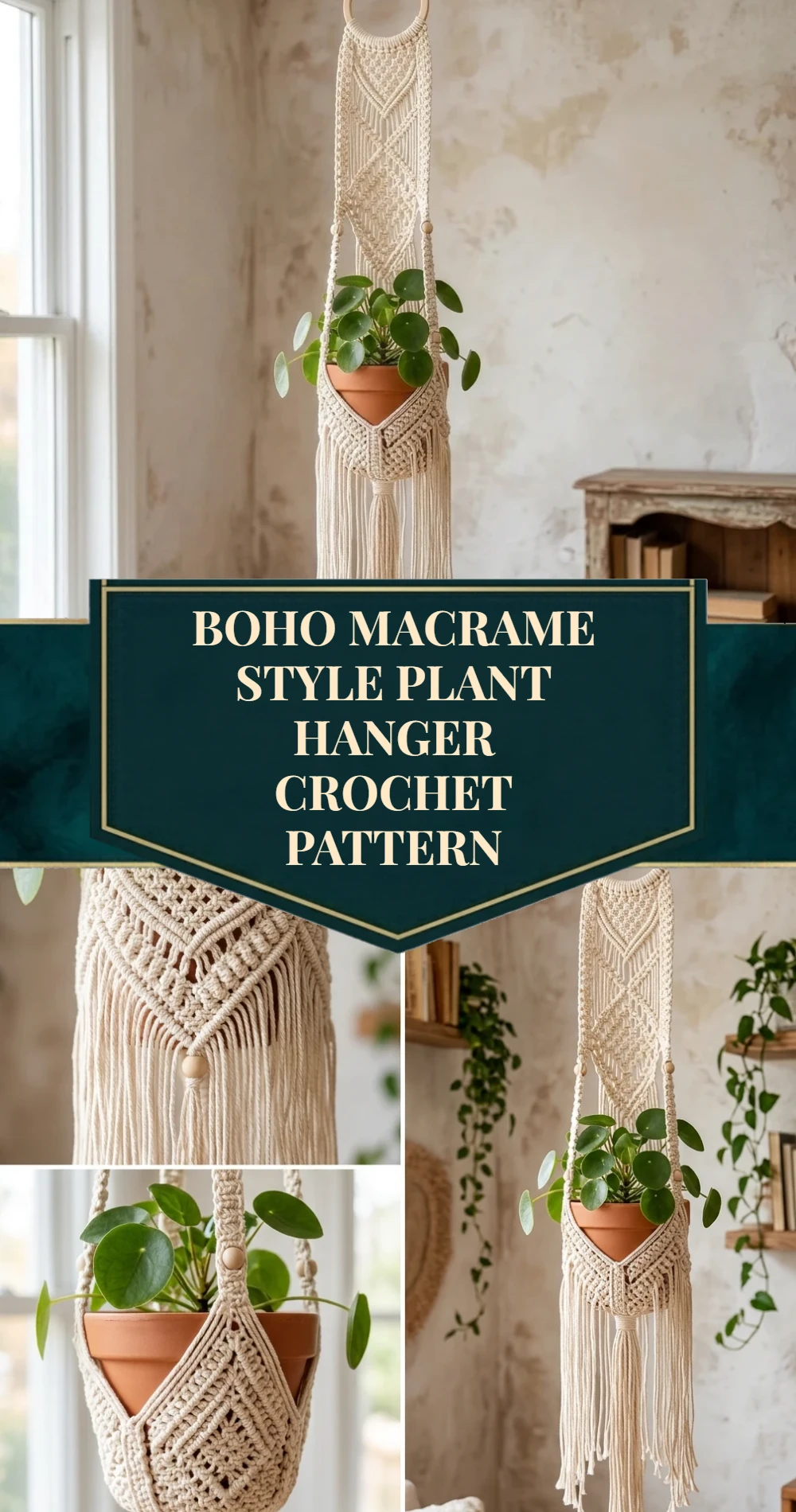
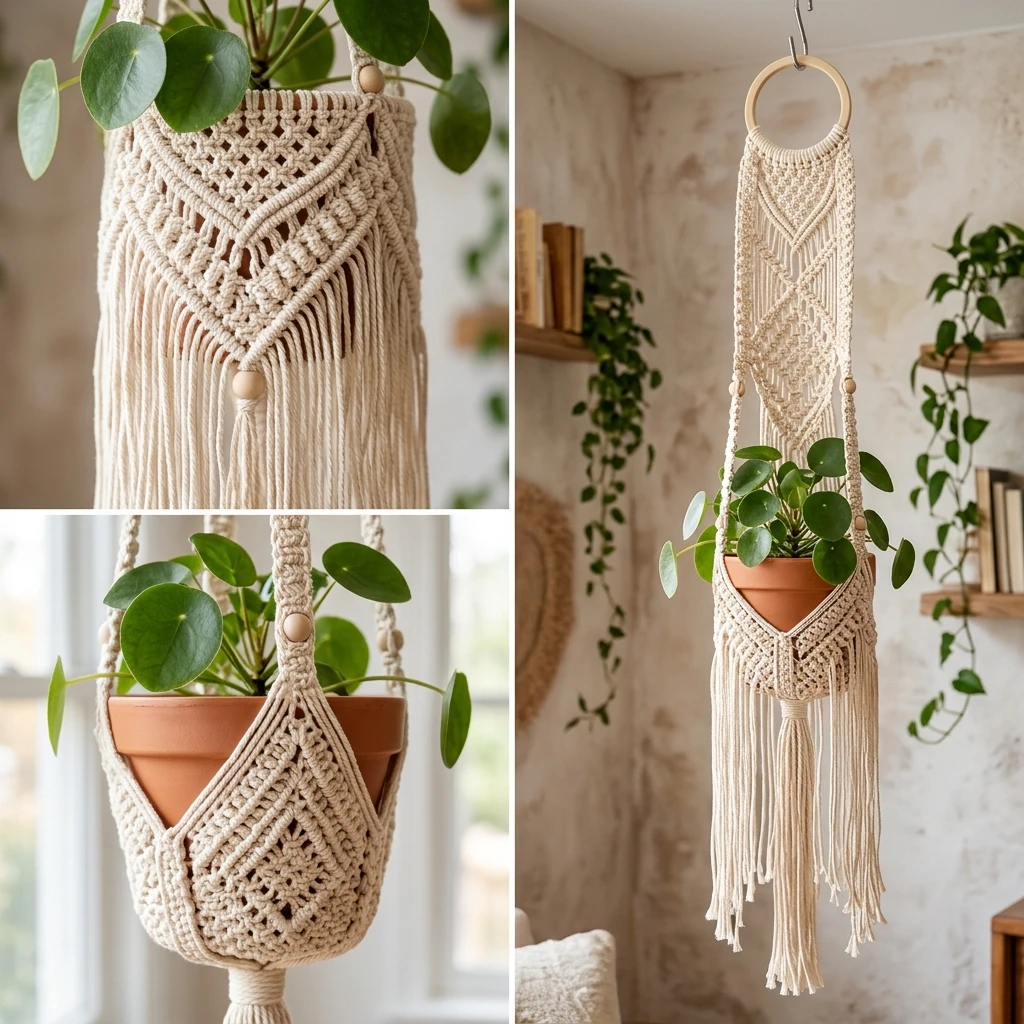

Bring the timeless, earthy aesthetic of macrame into your home with a modern crochet twist. This Boho Macrame Style Plant Hanger mimics the intricate knots of traditional cord-work using clever crochet stitches and sturdy cotton yarn. Designed for those who love the “urban jungle” look but prefer the rhythm of a crochet hook over tying knots, this project creates a structural, decorative cradle for your favorite greenery. The construction focuses on high-tension cords and an open-work mesh basket that expands to fit various pot shapes, finished with a dramatic, floor-skimming tassel that anchors the design in true bohemian fashion.
The Design: What Makes This Pattern Different
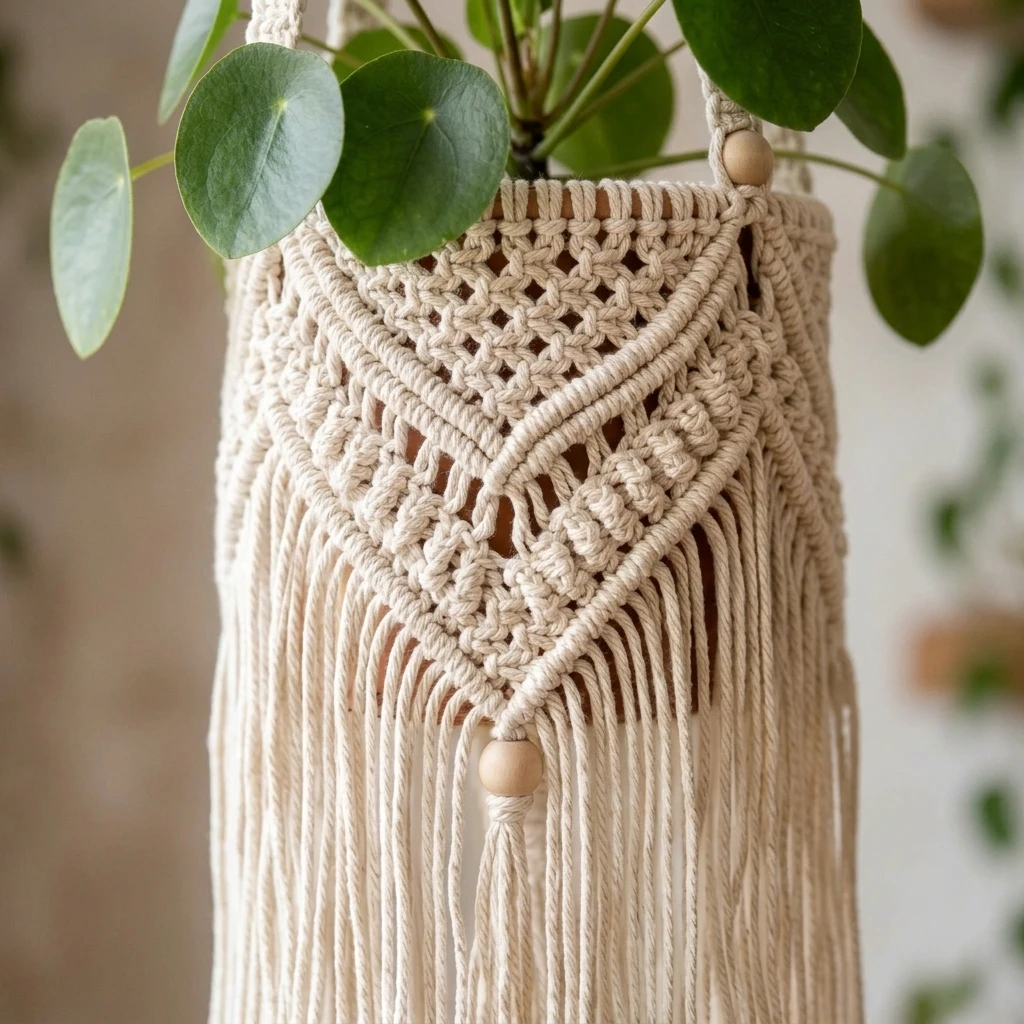
Unlike standard crochet plant hangers that can often look bulky or “grandmotherly,” this design prioritizes negative space and structural integrity. The use of elongated stitches, such as triple crochets and chain loops, replicates the look of macrame “square knots” without the complexity of manual knotting. We have integrated a solid base to prevent pot slippage, a feature often missing in traditional macrame. One common mistake to avoid when making this hanger is using a yarn with high elasticity, such as acrylic or wool. Because plants are heavy—especially after watering—using a stretchy fiber will cause the hanger to elongate unevenly over time, potentially leading to a lopsided display or a dropped pot.
Project Info at a Glance
| Feature | Details |
|---|---|
| Skill Level | Intermediate (due to high-tension requirements) |
| Estimated Time | 2–3 Hours |
| Finished Size | Approx. 36 inches long (adjustable based on tassel length) |
| Hook Size | 5.0mm (H/8) |
| Yarn Weight | Category 4 (Worsted) or 2mm Cotton Cord |
| Gauge | 4″ = 14 sts in dc (Gauge is photo-inspired; tension should be very tight) |
| Best For | 4-6 inch terracotta or ceramic pots |
Materials and Tools
Yarn
For this project, a non-mercerized cotton is highly recommended to achieve the matte, boho look. You will need approximately 120–150 yards of worsted weight cotton (estimated). Using a multi-strand cotton cord specifically designed for crochet will provide the best structural results and prevent the hanger from sagging under the weight of a wet plant.
Tools
- 5.0mm Crochet Hook (or 4.5mm if you tend to crochet loosely)
- One 2-inch wooden or metal ring (for hanging)
- Measuring tape
- Stitch markers
- Sharp scissors and a large-eye tapestry needle
- A heavy book or clipboard (to hold the ring while working the cords)
Abbreviations
- ch: chain
- sc: single crochet
- dc: double crochet
- tr: treble crochet
- sl st: slip stitch
- sk: skip
- st(s): stitch(es)
- sp: space
Pattern — Step by Step
Section 1: The Hanging Loop and Upper Cords
The construction begins at the top. Instead of crocheting into a magic ring, we work directly over a wooden ring to ensure the hanger can support several pounds of weight. Use tight tension here to minimize hardware movement.
- Join yarn to the wooden ring with a sl st. Work 20 sc around the ring, or until the ring is completely covered. Sl st to the first sc to join.
- Cords (Make 4): Ch 60 (or desired length for the hanging height). Working back down the chain, sc in the second ch from hook and in each ch across. Fasten off, leaving a 10-inch tail. Repeat until you have four identical cords attached to the ring at equal intervals (every 5th stitch).
Section 2: The Pot Cradle (Mesh Basket)
This section is worked in rounds to create a net-like structure. We will connect the four cords at the base of where the pot will sit.
- Round 1: Join the ends of all four cords by holding them together and working 8 sc into a magic ring (2 sc from each cord end). Sl st to join. [8 sts]
- Round 2: Ch 1, 2 sc in each st around. Sl st to join. [16 sts]
- Round 3: Ch 4 (counts as dc + ch 1), *dc in next st, ch 1; repeat from * around. Sl st to 3rd ch of beginning ch-4. [16 dc, 16 ch-sp]
- Round 4: Sl st into first ch-sp. Ch 6 (counts as dc + ch 3), *dc in next ch-sp, ch 3; repeat from * around. Sl st to 3rd ch of beginning ch-6.
- Round 5: Sl st into first ch-sp. Ch 8 (counts as tr + ch 4), *tr in next ch-sp, ch 4; repeat from * around. Sl st to 4th ch of beginning ch-8.
Section 3: The Base and Tassel Foundation
To secure the pot, we close the mesh slightly at the bottom to create a stable “seat.”
- Round 6: Ch 1, work 3 sc in each ch-4 space around. Sl st to join.
- Round 7: Ch 1, sc in each st around. Fasten off and weave in ends.
Assembly
The assembly of a boho plant hanger requires careful alignment to ensure the pot sits level. Since the cords and basket are worked as part of the pattern, assembly primarily focuses on the decorative elements and final structural reinforcements.
- Lay the project flat on a table and straighten the four hanging cords to ensure they are not twisted.
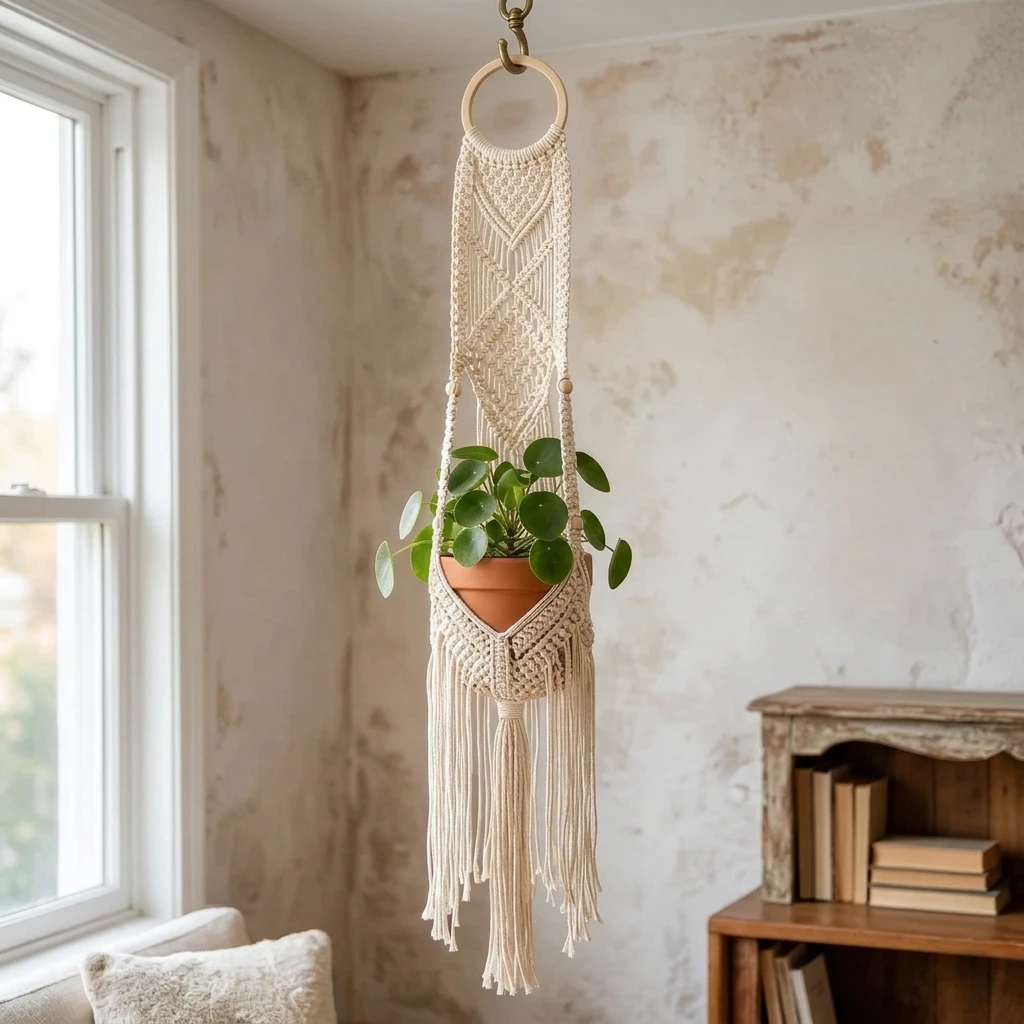
- Create the Tassel: Cut 20 strands of yarn, each 20 inches long. Fold them in half and loop them through the center of the Round 7 base.
- The Gathering Knot: Take a separate 15-inch strand of yarn and perform a “magic wrap” or “gathering knot” around the top of the tassel strands to secure them tightly against the bottom of the basket.
- Trim the bottom of the tassel evenly with sharp scissors to achieve a clean, professional finish.
- Insert your empty pot into the basket first to check the fit and adjust the cord tension if one side appears longer than the others.
7 Technical Tips for a Better Boho Macrame Style Plant Hanger Crochet Pattern
- Check Your Fiber: Always use 100% cotton or a cotton/linen blend. Avoid “soft” cottons meant for baby blankets; seek out “kitchen cotton” or stiff macrame cord for better durability.
- Weight Testing: Before hanging your plant, place a heavy object (like a bag of rice) in the hanger for 24 hours to allow the stitches to “set” and find their natural stretch point.
- Tension Consistency: Maintain a very tight tension on the chains and the base. If your stitches are loose, the pot may tilt or slip through the mesh.
- Invisible Joins: When finishing the sc around the wooden ring, use an invisible join instead of a slip stitch for a seamless 360-degree look.
- Customizing Size: To fit a larger 8-inch pot, add one more round of mesh (Round 6) by increasing the chain spaces from ch-4 to ch-6 before working the sc base.
- Steam Blocking: Lightly steam the cords (avoiding the wooden ring) to remove any kinks from the yarn and help the hanger lay straight.
- Fringe Care: If your tassel becomes frizzy, you can lightly brush it with a fine-tooth comb to give it that brushed macrame look.
Frequently Asked Questions
Can I use a plastic ring instead of wood?
Yes, but ensure it is a high-quality, thick plastic. Thin plastic rings can snap or warp under the weight of heavy ceramic pots and damp soil.
How do I clean my crochet plant hanger?
Hand wash only in cool water with a mild detergent. Do not wring or hang to dry while wet, as the weight of the water will over-stretch the cords. Lay flat on a towel until damp, then reshape.
What if my pot is too small for the mesh?
You can add a “coaster” to the bottom of the basket by crocheting a solid circle of sc rounds and sewing it into the center of the cradle before adding the tassel.
Does the yarn color bleed onto the pot?
Cheaply dyed yarns may bleed if they get wet during watering. It is best to remove the pot to water it, let it drain, and then place it back in the hanger.
How do I make the cords longer?
Simply increase the initial chain count in Section 1. Just remember that longer cords will experience more “gravity stretch” over time.
Conclusion
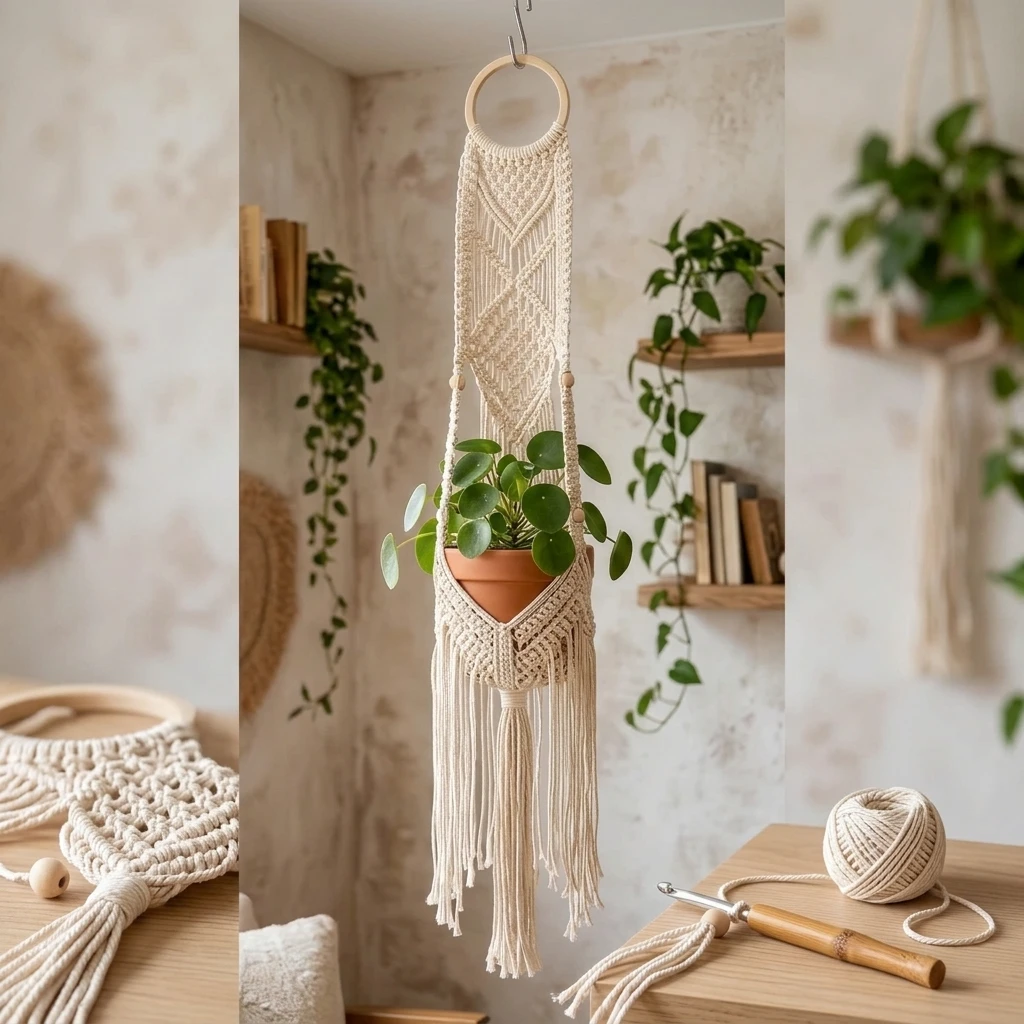
Creating a Boho Macrame Style Plant Hanger is a rewarding way to combine the structural beauty of macrame with the versatility of crochet. By using sturdy cotton and focusing on tight tension, you can create a functional piece of home decor that rivals high-end boutique finds. This project is perfect for using up leftover cotton yarn while adding a touch of vertical greenery to your living space. If you enjoyed this tutorial, be sure to pin it to your Crochet Decor board on Pinterest!
Which plant are you planning to display in your new boho hanger first?
Save This Crochet Pattern