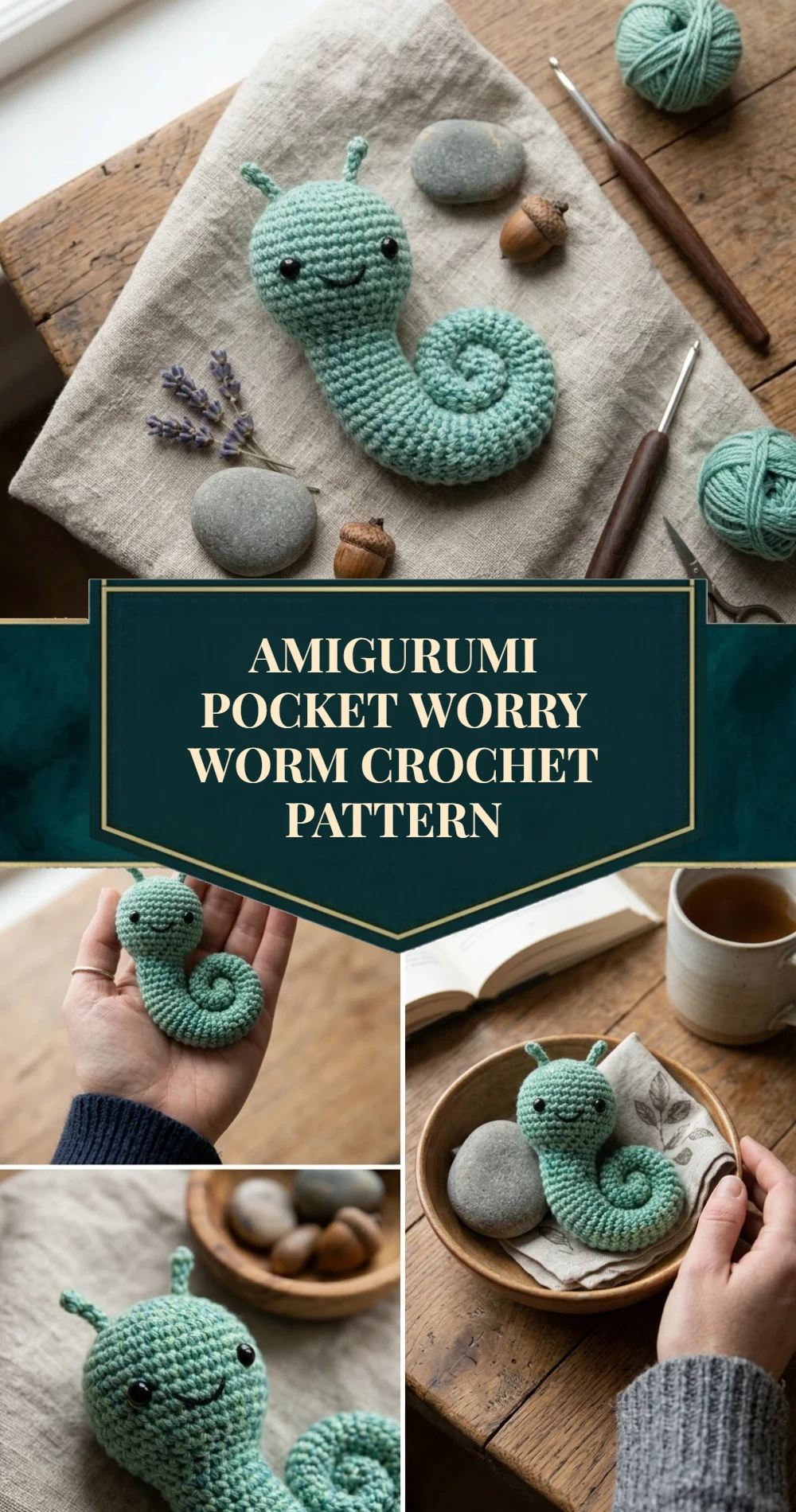
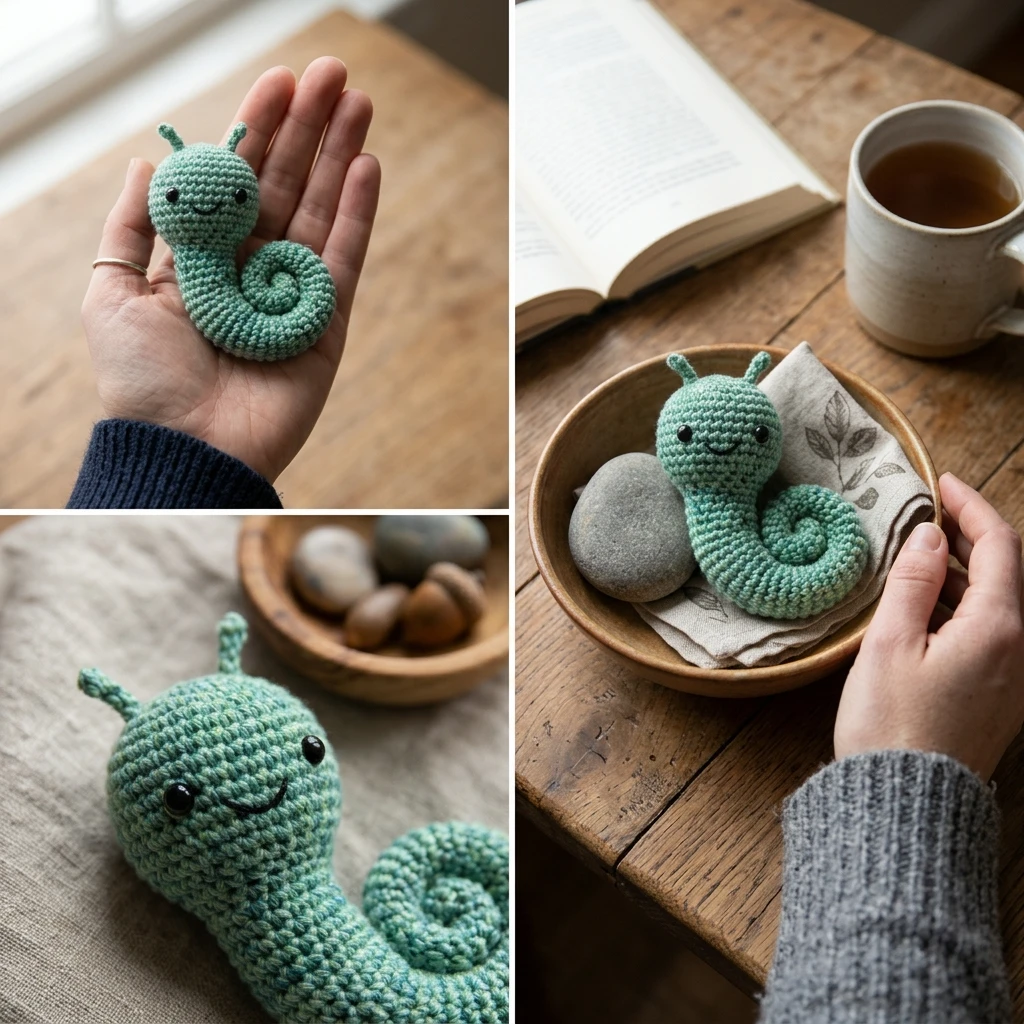

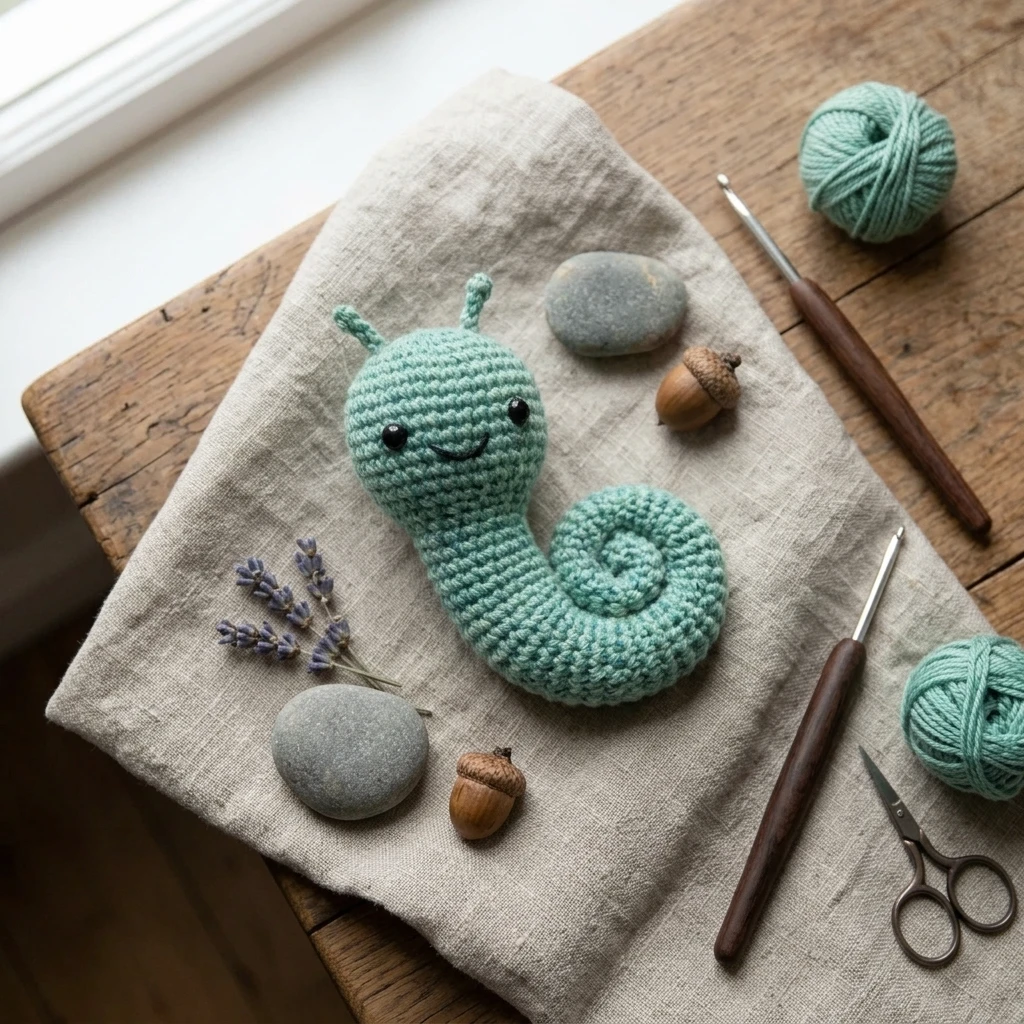
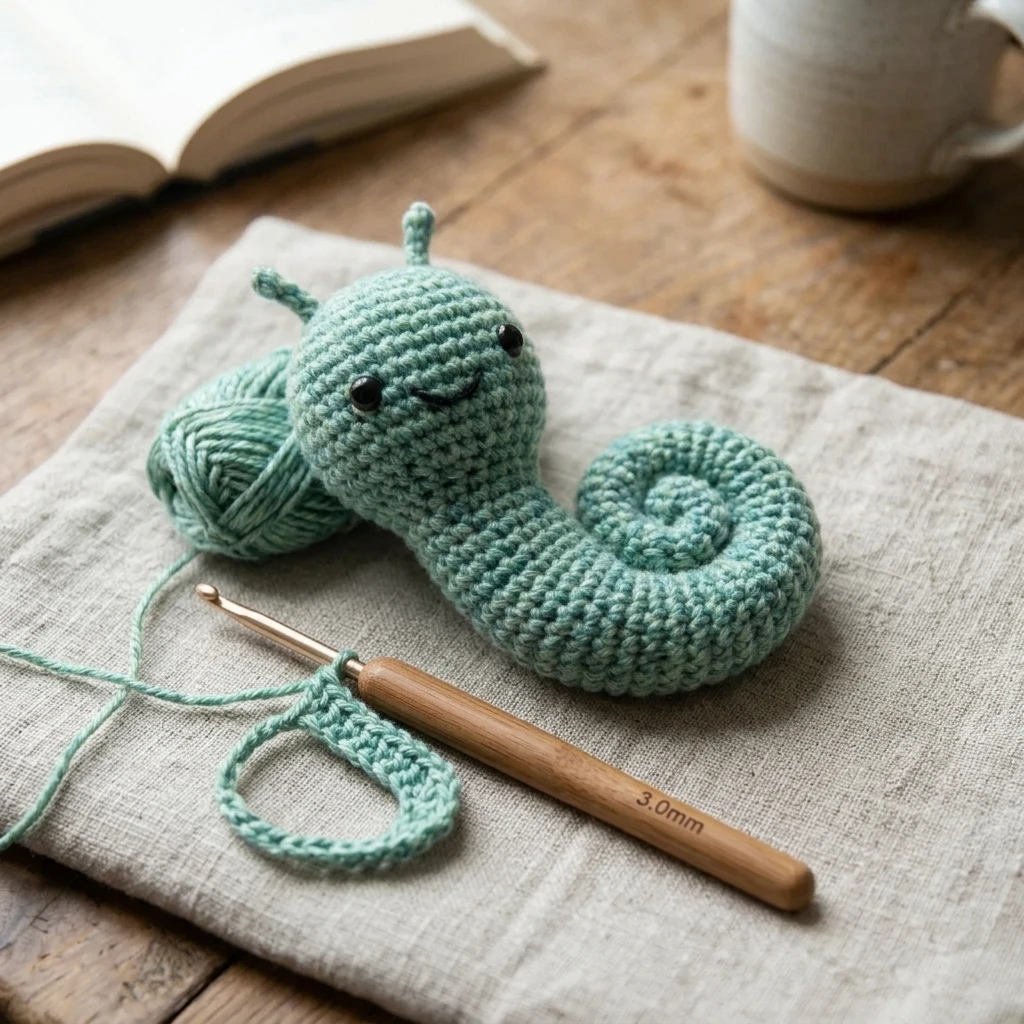
The Amigurumi Pocket Worry Worm is a tactile, comforting companion designed to provide sensory relief and emotional support. Small enough to tuck into a pocket or palm, these whimsical creatures feature a bouncy, spiraled body and a friendly amigurumi face. Unlike standard stuffed toys, the construction relies on a clever mechanical curl created by stitch increases, making it a satisfying project for beginners and a meaningful gift for anyone needing a little extra calm during their day.
The Design: What Makes This Pattern Different
While many amigurumi patterns require complex shaping and multiple joined pieces, the Pocket Worry Worm utilizes a hybrid construction. The head is worked in a traditional continuous spiral for a clean, spherical look, while the body utilizes a “physics-based” crochet technique where three to four stitches are worked into a single chain. This causes the fabric to twist naturally without the need for wire or stiffeners. One common mistake to avoid is working too tightly on the foundation chain of the body; if the initial chain is too tight, the worm will become stiff rather than bouncy and springy.
Project Info at a Glance
| Feature | Details |
|---|---|
| Skill Level | Beginner / Easy |
| Estimated Time | 30 – 45 Minutes |
| Finished Size | Approximately 4.5 – 5.5 inches (extended) |
| Hook Size | 3.5mm (E) or 4.0mm (G) |
| Yarn Weight | Medium Worsted Weight (4) |
| Gauge | Not critical, but stitches should be tight enough to contain stuffing |
| Best For | Anxiety relief, classroom gifts, and craft fairs |
Materials and Tools
Yarn
For the best results, use a smooth cotton or acrylic blend. Cotton provides excellent stitch definition and a sturdy feel, while acrylic offers a softer, fuzzier texture. You will need approximately 15-20 yards of your primary color. Variegated yarns are particularly effective for this pattern as the color shifts accentuate the spiral of the body.
Tools
- Crochet hook (3.5mm or 4.0mm)
- Small amount of polyester fiberfill stuffing
- 6mm safety eyes or black embroidery thread for eyes
- Tapestry needle
- Stitch marker
- Scissors
Abbreviations
- ch: Chain
- sl st: Slip stitch
- sc: Single crochet
- hdc: Half double crochet
- inc: Increase (2 sc in the same stitch)
- dec: Decrease (sc 2 together, preferably invisible decrease)
- st(s): Stitch(es)
- MR: Magic Ring
Pattern — Step by Step
Construction Overview
This pattern is worked in two distinct phases. First, you will create a small spherical head in the round. Without breaking the yarn, you will then transition into a long chain that forms the base of the spiraled body. The body is worked back up the chain toward the head, and then finished with a slip stitch to secure the components together.
The Amigurumi Head
- Round 1: Start with a MR, 6 sc into the ring. (6)
- Round 2: 2 sc in each st around. (12)
- Round 3: [1 sc, inc] repeat 6 times. (18)
- Round 4-6: sc in each st around. (18)
- Note: Insert safety eyes between rounds 4 and 5, leaving 3 stitches between them.
- Round 7: [1 sc, dec] repeat 6 times. (12)
- Round 8: [dec] repeat 6 times. (6)
- Stuff the head firmly before the hole becomes too small. Do not fasten off.
The Spiraled Body
- Foundation: Ch 30 (or more if you want a longer worm).
- Row 1: Starting in the second ch from the hook, work 4 hdc into every chain stitch until you reach the base of the head.
- Finishing the Body: Once you reach the head, sl st into the nearest stitch of Round 8 to secure the body.
Assembly
Since the body is worked directly from the head, assembly is minimal and involves mostly finishing touches and security. Ensure your knots are hidden inside the stuffed head for a professional look.
- After the final slip stitch, cut the yarn leaving a 6-inch tail.
- Thread the tail onto a tapestry needle.
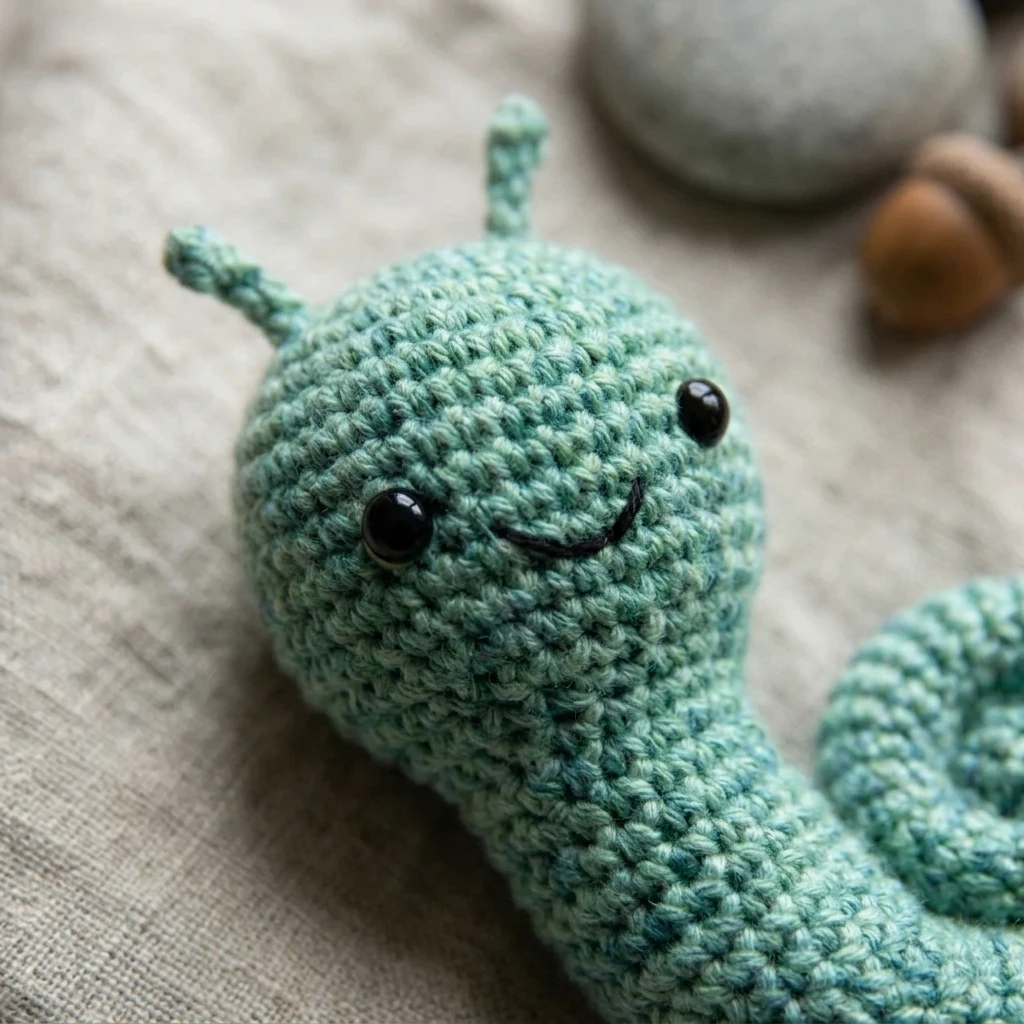
- Weave the needle through the remaining 6 stitches of the head (Round 8) and pull tight to close the gap around the base of the worm’s “neck.”
- If you chose not to use safety eyes, use black embroidery thread to stitch two small “V” shapes or French knots onto the face for eyes.
- Use the needle to pull the yarn tail through the head several times to secure it, then snip the excess.
- Gently twist the body with your fingers to encourage the spiral to sit uniformly.
7 Technical Tips for a Better Amigurumi Pocket Worry Worm Crochet Pattern
- Manage Your Tension: Keep your foundation chain for the body slightly loose. If it is too tight, the hdc increases will cause the chain to snap or curl so tightly that the worm loses its length.
- Invisible Decreases: When working the head, use the invisible decrease method (flo) to prevent gaps where the stuffing might show through.
- Yarn Choice: Avoid extremely dark colors like black or navy if you are a beginner, as it is difficult to see the stitches in the center of the spiral.
- Safety First: If making this for a small child, embroider the eyes instead of using plastic safety eyes to eliminate choking hazards.
- Varying the Curl: For a looser, floppier worm, work 3 hdc in each chain. For a tight, springy worm, work 4 hdc or even dc in each chain.
- Stitch Markers: Always use a marker for the head rounds. Because the piece is so small, it is very easy to lose your place during the increase rounds.
- Massage the Spiral: When you finish, the worm might look like a clump. Tug it gently from both ends and twist it in the direction of the curl to “set” the stitches.
Frequently Asked Questions
What is the best yarn for a worry worm?
Cotton yarn is highly recommended because it is durable and withstands frequent handling or “fidgeting.” It also doesn’t pill as easily as low-quality acrylic, keeping the worm looking new longer.
Can I make the worm longer?
Yes! Simply increase the number of chains in your foundation chain. Keep in mind that the more chains you add, the more yarn you will consume, as each chain requires multiple stitches.
How do I stop the stuffing from coming out?
If you see stuffing through your stitches, your hook size is likely too large for your yarn. Drop down 0.5mm or 1.0mm in hook size to create a denser fabric for the amigurumi head.
Do I have to use a Magic Ring?
If you struggle with the Magic Ring, you can chain 2 and work your first 6 sc into the second chain from the hook. However, the Magic Ring provides a tighter closure for the top of the head.
Are these washable?
Yes, provided you use washable yarn and stuffing. Place the worry worm in a small mesh laundry bag and wash on a delicate cycle, then air dry to maintain the spiral shape.
Conclusion
The Amigurumi Pocket Worry Worm is a quick, heartwarming project that combines basic amigurumi skills with fun textural techniques. Whether you are making them for charity, friends, or yourself, these little worms offer a tactile sense of comfort that is truly unique. Don’t forget to experiment with different yarn textures to see how they change the bounciness of the spiral!
Save this pattern to your Pinterest crochet board for later!
Which color yarn will you choose for your first worry worm—a calming solid or a bright variegated mix?
Save This Crochet Pattern