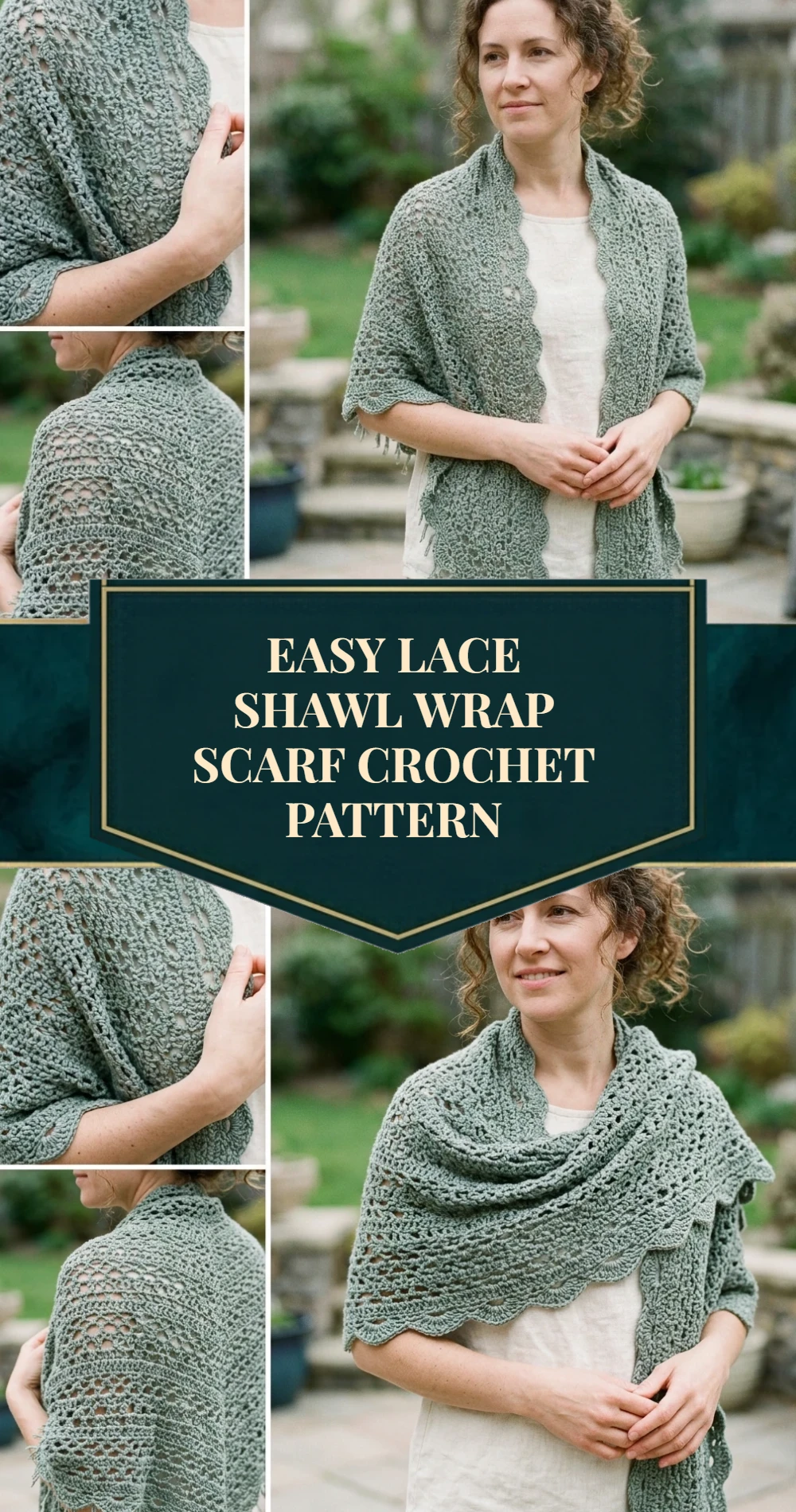
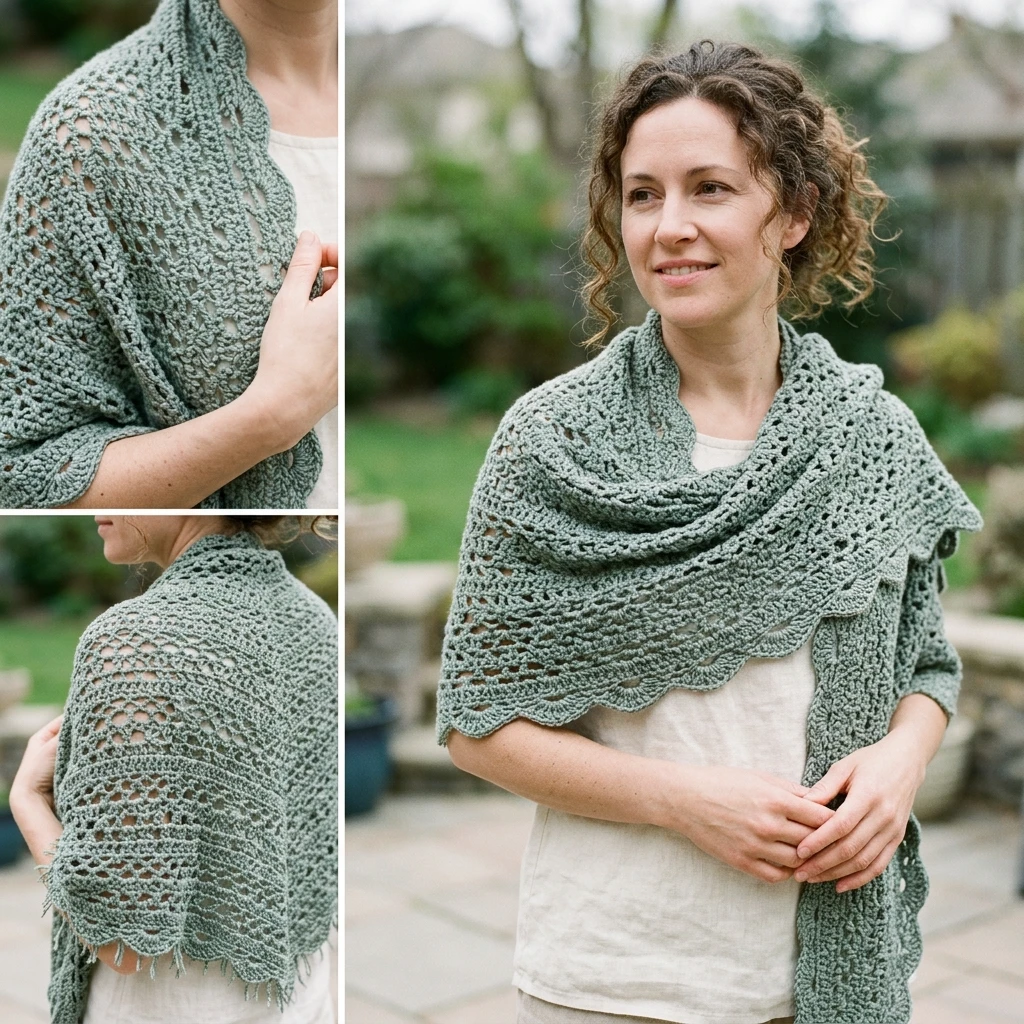

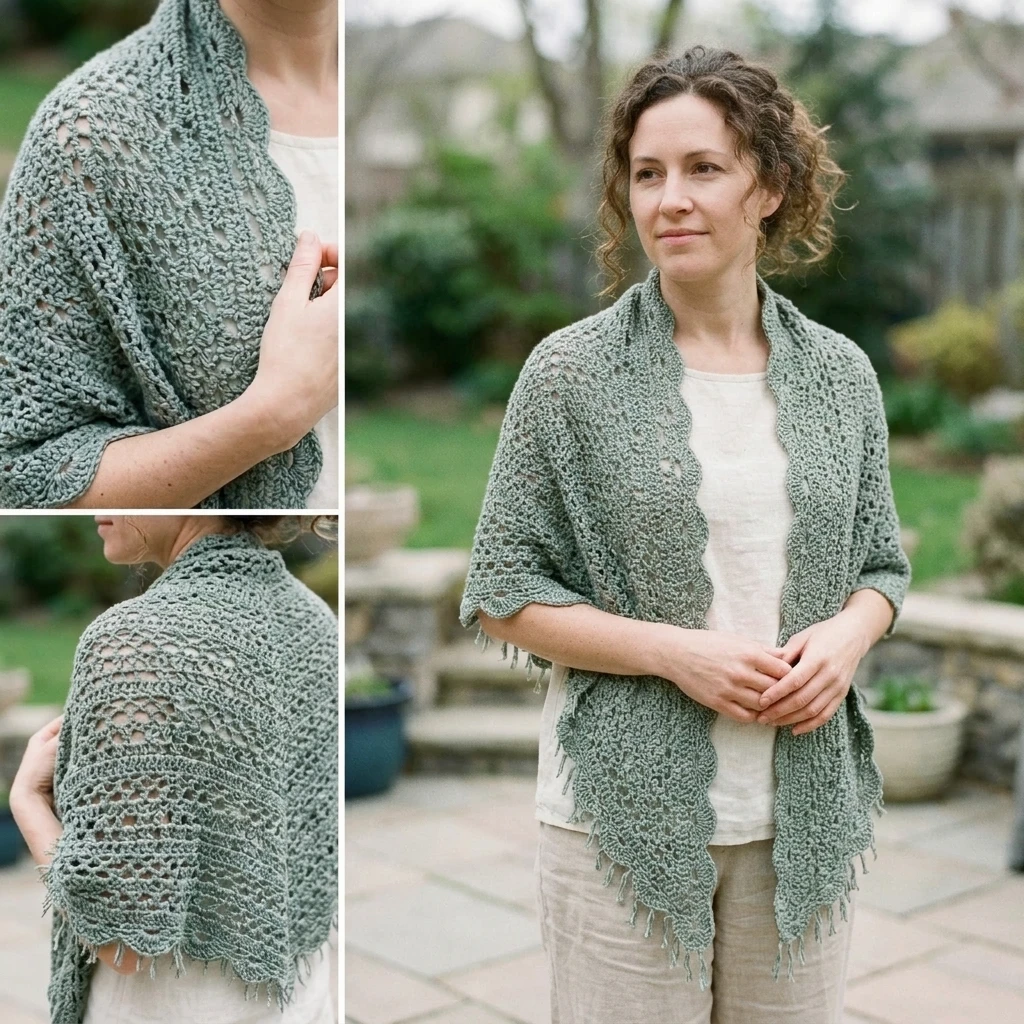
This Easy Lace Shawl Wrap Scarf offers the perfect blend of airy elegance and functional warmth. Designed as a versatile rectangular wrap, it features a rhythmic repetition of openwork stitches that create a beautiful, drape-heavy fabric suitable for weddings, evening strolls, or as a sophisticated oversized scarf. The construction is worked flat in rows, making it an ideal project for those looking to master lace without the complexity of constant increasing or decreasing. Whether styled over the shoulders as a shawl or bunched around the neck as a luxurious scarf, this piece provides a timeless aesthetic that suits both formal and casual wardrobes.
The Design: What Makes This Pattern Different
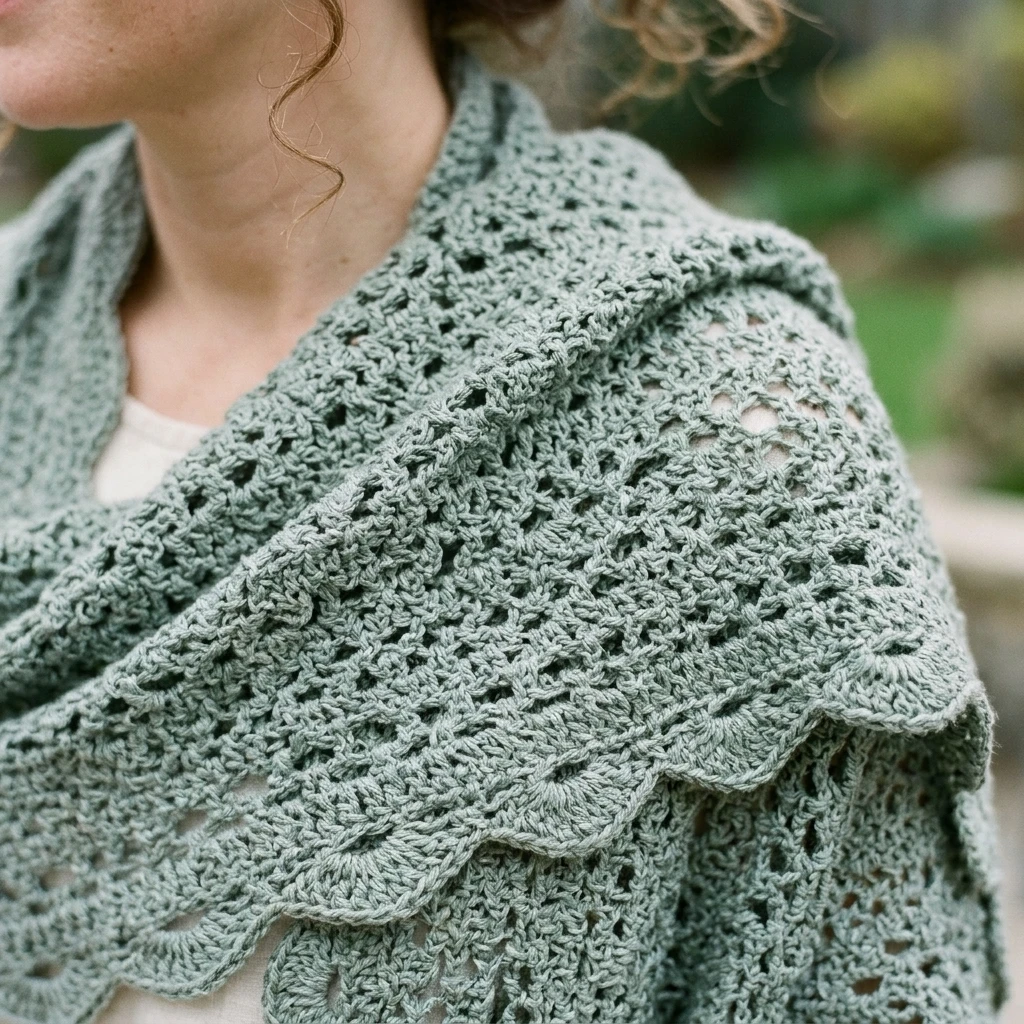
The visual identity of this lace shawl relies on the balance between negative space and structural double crochet clusters. Unlike many lace patterns that require intense concentration on every stitch, this design utilizes a two-row repeat that becomes intuitive quickly. The structural decision to use a larger hook than typically recommended for the yarn weight ensures the “wrap” has maximum movement and doesn’t become stiff or heavy.
A common mistake to avoid when working this pattern is tightening the chain spaces. In lace work, the chains are just as important as the physical stitches; if they are worked too tightly, the shawl will pull inward, losing its rectangular shape and preventing the lace from “opening up” during the blocking process. Keeping a relaxed tension on your yarn-overs is key to achieving that professional, boutique-style finish.
Project Info at a Glance
| Feature | Details |
|---|---|
| Skill Level | Easy / Advanced Beginner |
| Estimated Time | 12 – 15 Hours |
| Finished Size | Approximately 18″ wide x 68″ long (Post-Blocking) |
| Hook Size | 5.0 mm (H-8) or size needed to obtain gauge |
| Yarn Weight | Category 2 (Sport) or Category 3 (DK) |
| Gauge | 16 sts and 8 rows = 4″ in pattern (Photo-inspired estimate) |
| Best For | Layering, Spring/Fall Wear, Gifts |
Materials and Tools
Yarn
For this project, you will need approximately 800 to 1,000 yards of yarn. A natural fiber blend, such as wool-silk or a high-quality cotton-acrylic mix, is suggested to ensure the lace remains crisp after blocking. If you choose a variegated yarn, look for long color changes to avoid “breaking” the visual flow of the lace repeat.
Tools
A standard 5.0 mm crochet hook is recommended to maintain an airy tension. You will also need a tapestry needle for weaving in ends, a pair of sharp embroidery scissors, and a set of blocking mats with T-pins. Blocking is mandatory for this pattern to set the dimensions and reveal the lace detail.
Abbreviations
Pattern — Step by Step
Construction Notes
This shawl is worked flat, back and forth in rows. The width is determined by your foundation chain, and the length is determined by the number of row repeats. Ensure your starting chain is worked loosely or use a hook one size larger for the foundation row only to prevent the edge from curving.
The Foundation
- Foundation Chain: Ch 74 (or any multiple of 6 + 2 for custom widths).
- Row 1: Sc in 2nd ch from hook. *Ch 5, sk 2 ch, sc in next ch. Rep from * to end of row. Turn.
The Lace Body
- Row 2: Ch 5 (counts as dc and ch 2), sc in first ch-5 loop. *5 dc in next sc, sc in next ch-5 loop, ch 5, sc in next ch-5 loop. Rep from * across, ending with ch 2 and 1 dc in the last sc. Turn.
- Row 3: Ch 1, sc in dc. *Ch 5, sc in center dc of the 5-dc cluster, ch 5, sc in ch-5 loop. Rep from * across, ending with sc in the 3rd ch of the turning ch. Turn.
- Row 4: Ch 3 (counts as dc), 2 dc in same st. *Sc in ch-5 loop, ch 5, sc in next ch-5 loop, 5 dc in next sc. Rep from * across, ending with 3 dc in the final sc. Turn.
- Row 5: Ch 1, sc in dc. *Ch 5, sc in ch-5 loop, ch 5, sc in center dc of the 5-dc cluster. Rep from * across, ending with sc in top of turning ch. Turn.
- Repeat: Repeat Rows 2 through 5 until the shawl reaches your desired length (suggested 65-68 inches).
Finishing the Edges
To create a symmetrical finish, end on a Row 3 or Row 5. You may add a final row of single crochet across the top and bottom edges to provide stability for fringe or a decorative border if desired. Fasten off and leave a 6-inch tail for weaving.
Assembly
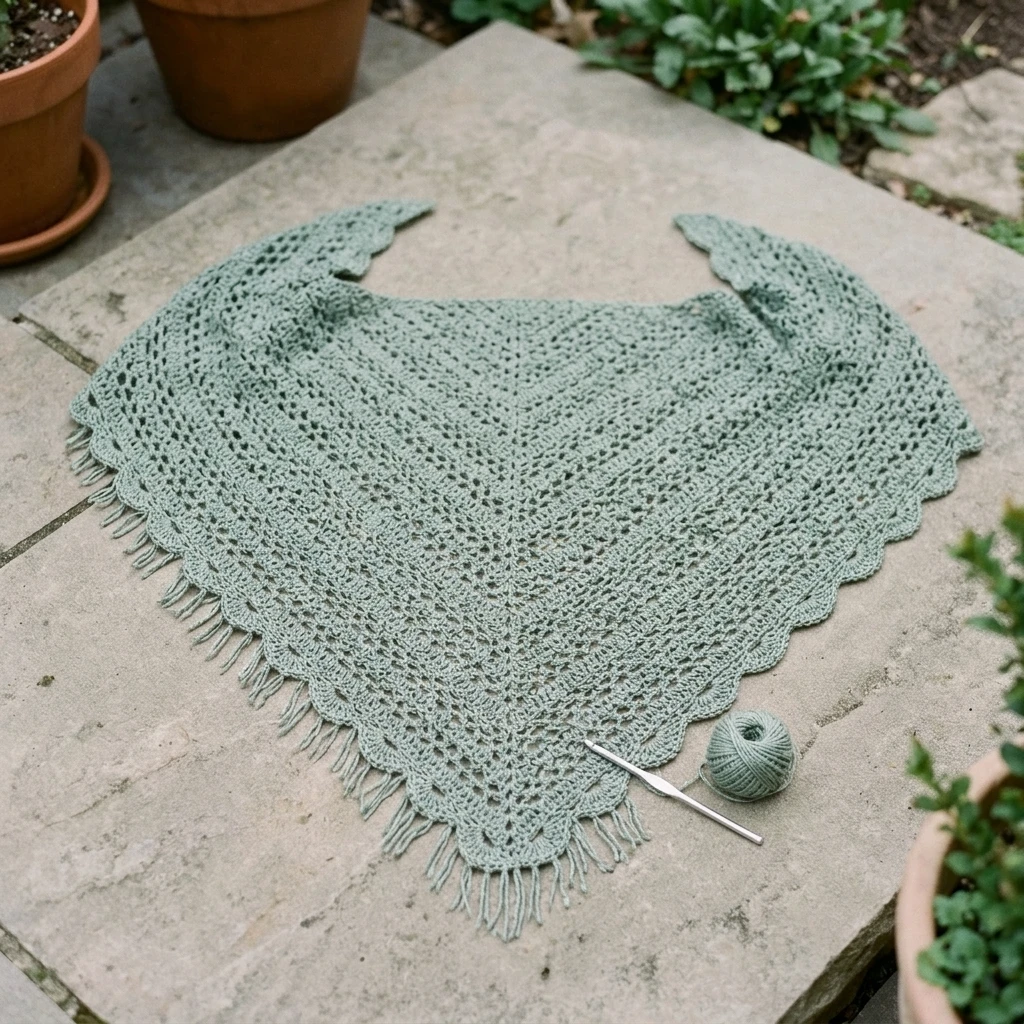
Because this is a rectangular wrap, the assembly focuses primarily on the refinement of the fabric rather than joining pieces. The “magic” happens during the wet blocking stage, where the stitches are stretched to their final intended form.
- Weave in all yarn tails using a tapestry needle, following the direction of the stitches to hide the ends effectively.
- Submerge the shawl in lukewarm water with a bit of wool wash for 15 minutes.
- Gently squeeze out excess water (do not wring) and roll in a towel to remove moisture.
- Lay the shawl flat on blocking mats. Use T-pins to pin the corners first, then pin along the edges every 2 inches, stretching the fabric until the lace windows are fully open and the sides are straight.
- Allow to air dry completely before removing pins.
7 Technical Tips for a Better Easy Lace Shawl Wrap Scarf Crochet Pattern
- Mind the Foundation: If your shawl looks like a rainbow (curving at the bottom), your starting chain is too tight. Always use a larger hook for the starting chain.
- Swatch and Block: Crochet a 4×4 inch square and block it before starting the full project. Lace changes significantly after being wet blocked.
- Use Stitch Markers: Place a marker in the first and last stitch of the row to avoid accidentally dropping stitches at the edges.
- Fiber Choice Matters: Acrylic yarn is bouncy but doesn’t “hold” a block as well as wool or cotton. Choose a fiber with some “memory” for the crispest lace.
- Count Your Clusters: It is easy to miss a ch-5 loop. Count your 5-dc clusters every few rows to ensure the pattern hasn’t shifted.
- Tension Consistency: Try to keep your ch-5 loops consistent in size. If they vary, the “holes” in the lace will look uneven.
- Fringe Weight: If adding fringe, be aware that it adds weight. This can stretch the shawl longer over time, so you may want to crochet it slightly shorter than your target length.
Frequently Asked Questions
Can I use a thicker yarn for this pattern?
Yes, you can use a Worsted (Category 4) yarn, but you must increase your hook size to at least 6.0 mm or 6.5 mm to maintain the drape. Note that the shawl will be much larger and heavier.
Is this pattern reversible?
While there is a slight “right side” (where the double crochet clusters look smoothest), the lace is airy enough that it appears virtually reversible, making it perfect for a scarf.
How do I make the shawl wider?
To increase the width, add stitches to your foundation chain in multiples of 6. Every 6 chains added will increase the width by approximately 1.5 to 2 inches depending on your gauge.
Do I have to block the shawl?
For lace projects, blocking is highly recommended. Without it, the stitches will look “scrunchy” and the rectangular shape will be less defined. Blocking transforms the project from a handmade item to a professional garment.
What if I run out of yarn?
Since this is a row-by-row construction, you can simply stop at any repeat of Row 3 or 5. If you are close to the end of your yarn, prioritize finishing the current row rather than starting a new one.
Conclusion
The Easy Lace Shawl Wrap Scarf is a rewarding project that results in a high-end accessory with minimal stress. By mastering the simple two-row repeat and applying proper blocking techniques, you can create a stunning piece that looks far more complex than it actually is. Don’t forget to save this pattern to your “Crochet Wearables” board on Pinterest for your next weekend project! What color yarn are you planning to use for your lace wrap?
Save This Crochet Pattern