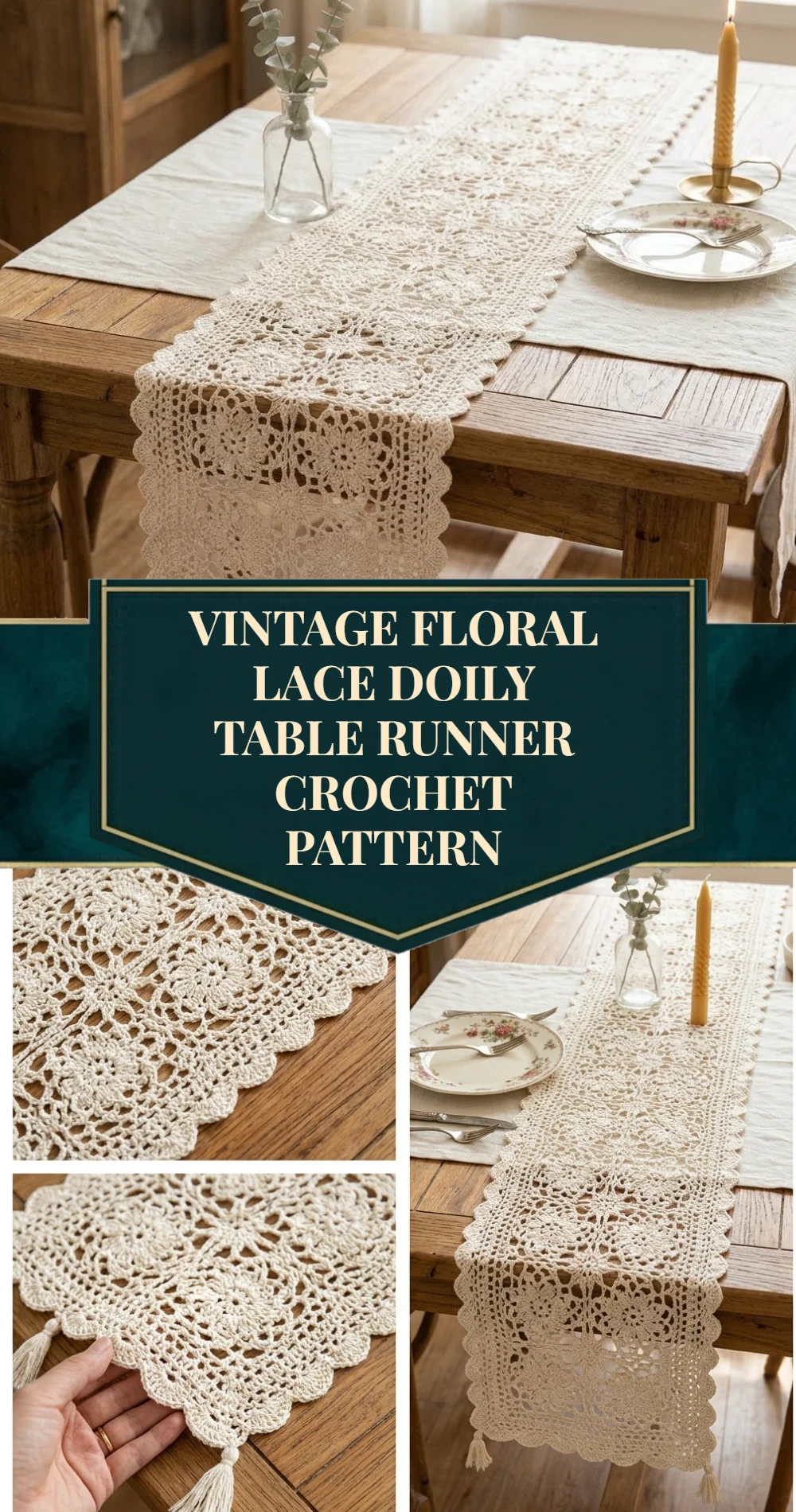
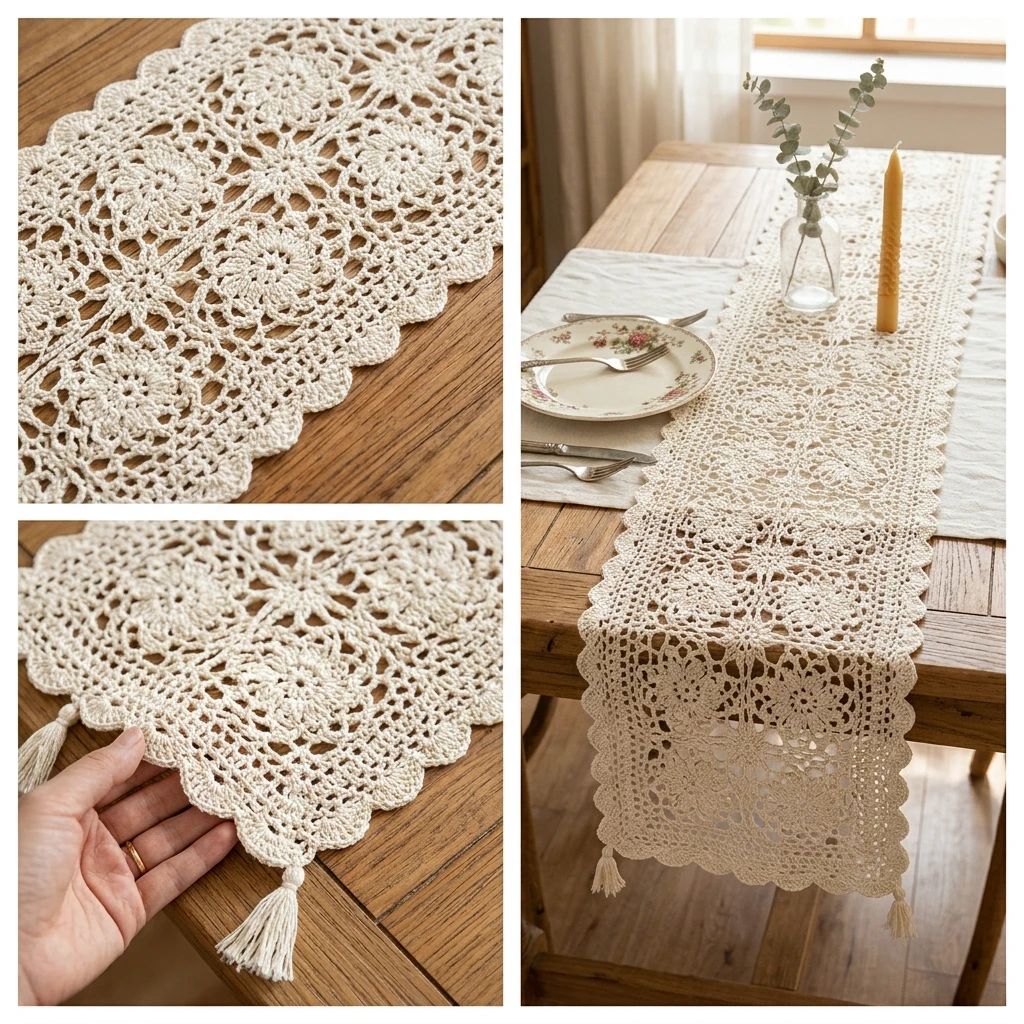

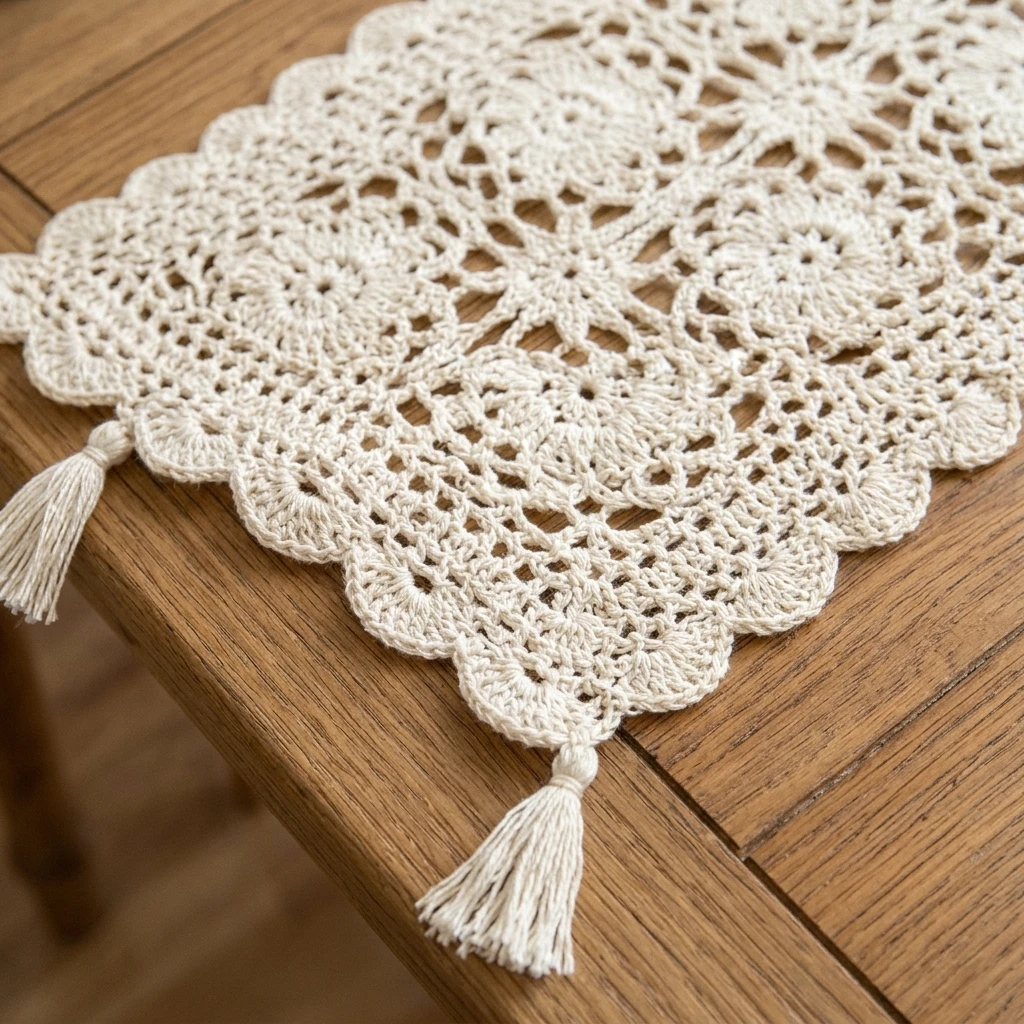
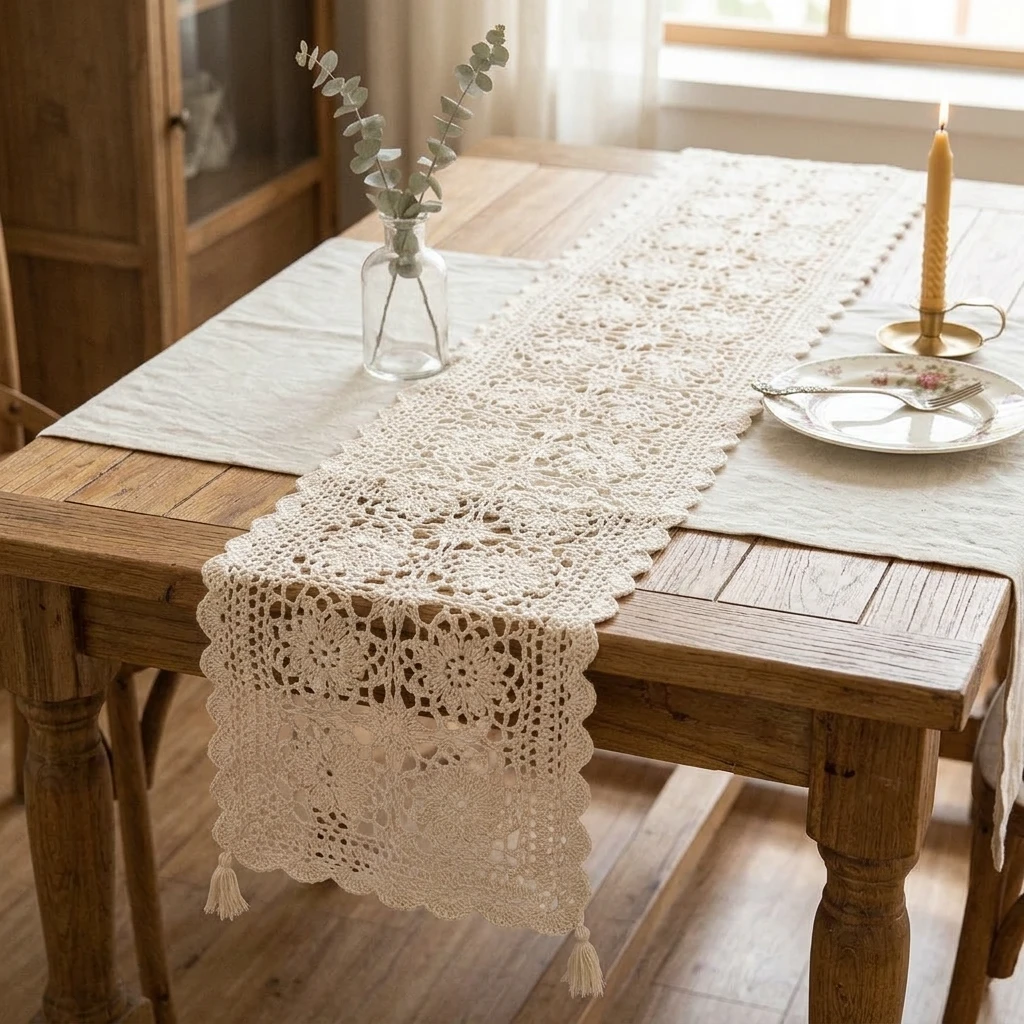
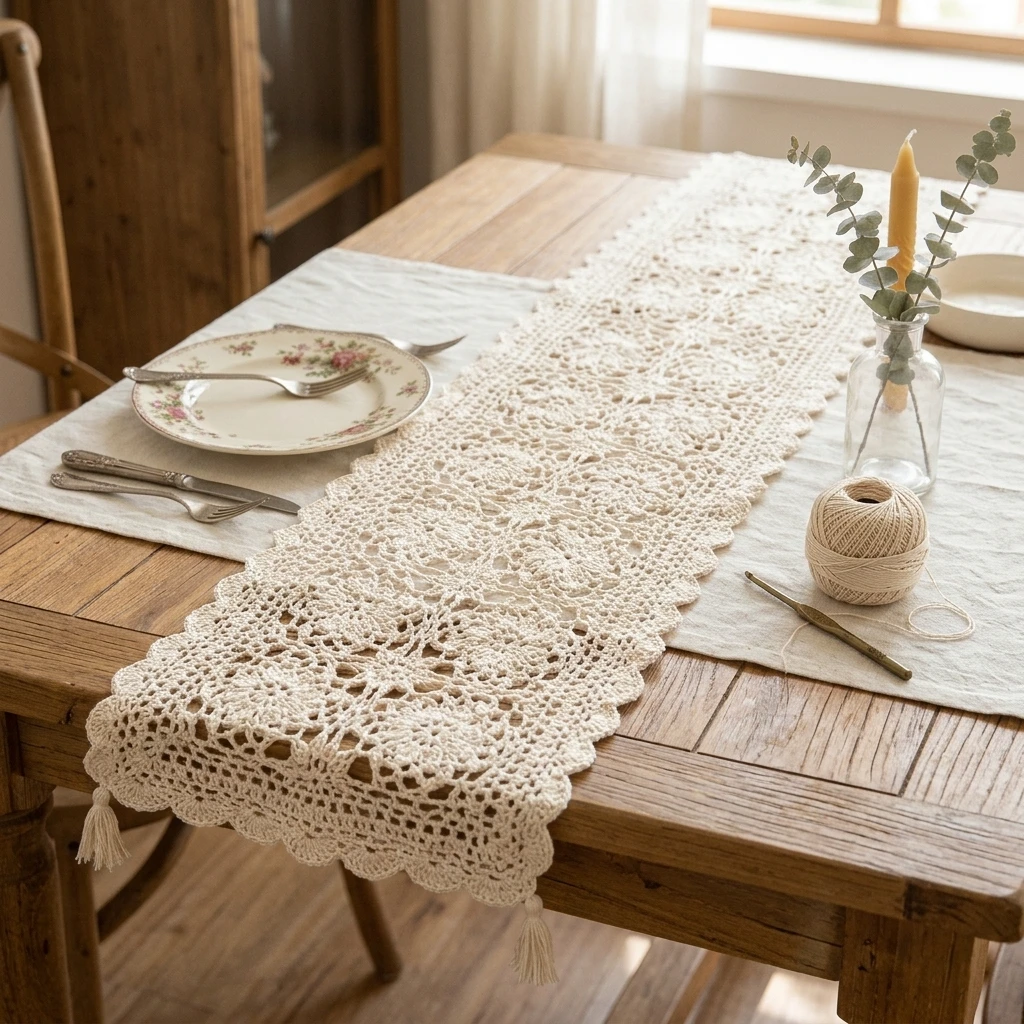
Capture the timeless elegance of a Victorian parlor with the Vintage Floral Lace Doily Table Runner. This project breathes new life into classic lace-making techniques, combining delicate floral medallions into a cohesive, sophisticated runner that graces any dining surface. Characterized by intricate picots, openwork shells, and a lightweight drape, this piece is designed for those who appreciate the slow art of crochet. Whether you are preparing for a formal event or creating a generational heirloom, this project offers a meditative process that results in a stunning architectural textile.
The Design: What Makes This Pattern Different
Unlike modern, bulky table runners, this vintage-inspired design relies on the negative space between stitches to create a “floating” floral effect. The construction is modular, allowing you to customize the length by adding or subtracting motifs. The structural integrity comes from a series of interlocking chain loops that form a sturdy mesh, ensuring the runner doesn’t stretch out of shape over time. One common mistake to avoid is using a hook that is too large for your thread; this can cause the floral centers to look sloppy rather than crisp and defined. Maintaining a slightly tighter tension than usual will help the “petals” of each doily pop against the table surface.
Project Info at a Glance
| Attribute | Details |
|---|---|
| Skill Level | Intermediate |
| Estimated Time | 20 – 25 Hours |
| Finished Size | Approximately 14″ x 45″ (Photo-inspired) |
| Hook Size | 1.50mm – 2.25mm (Steel Hook) |
| Yarn Weight | Size 10 Cotton Crochet Thread |
| Gauge | One motif = 4.5″ diameter (Suggested) |
| Best For | Heirloom gifts, Wedding decor, Victorian aesthetics |
Materials and Tools
Yarn
For this pattern, high-quality mercerized cotton thread is essential to achieve the signature “vintage” sheen and crisp stitch definition. It is estimated you will need approximately 1,200 to 1,500 yards of Size 10 crochet thread to complete a standard 45-inch runner. Traditional ecru or stark white are the most common choices, though a soft sage or dusty rose can offer a beautiful contemporary twist on the classic design.
Tools
A steel crochet hook is required for this project. Ensure you have a set of fine-tipped scissors for clean thread cuts and a tapestry needle specifically designed for fine lace. Rust-proof T-pins and a blocking mat are non-negotiable for the final shaping process, as the lace will look bunched and unattractive until it is properly wet-blocked.
Abbreviations
- ch: Chain
- sc: Single Crochet
- dc: Double Crochet
- tr: Treble Crochet
- sl st: Slip Stitch
- sp: Space
- sk: Skip
- lp: Loop
- picot: Ch 3, sl st in first ch
- cl: Cluster
Pattern — Step by Step
The Floral Medallion (Make 12 – 15)
The runner is constructed by creating individual floral doilies that are later joined together. Each medallion starts from the center and grows outward in concentric rounds of lace.
- Foundation: Ch 8, join with a sl st to form a ring.
- Round 1: Ch 1, 16 sc into the ring. Join with sl st to first sc. (16 sc)
- Round 2: Ch 4 (counts as dc and ch 1), *dc in next st, ch 1; repeat from * around. Join to 3rd ch of beginning ch-4. (16 dc, 16 ch-1 sps)
- Round 3: Sl st into first ch-sp. Ch 3, 2-dc cluster in same sp. *Ch 3, 3-dc cluster in next ch-sp; repeat from * around. Join with ch 1 and hdc into top of first cluster to create the final space.
- Round 4: Ch 1, sc in same sp. *Ch 5, sc in next ch-3 sp; repeat from * around. Join with sl st.
- Round 5 (Petal Round): Sl st into ch-5 lp. In each lp around: [sc, hdc, 3 dc, ch 3 (picot), 3 dc, hdc, sc]. Sl st to join. Fasten off for the first motif.
Connecting the Motifs
For subsequent motifs, you will join them during Round 5. Instead of the ch-3 picot, you will ch 1, sl st into the corresponding picot of the finished motif, ch 1, and continue the petal. This creates a seamless lace connection without bulky seams.
Assembly
Once all floral medallions are completed and joined into a long rectangular strip, the final assembly involves stabilizing the edges and preparing the fabric for display. Proper alignment during the joining phase is crucial to ensure the runner lies flat on your table.
- Layout: Lay your joined strip of medallions on a flat surface to check for any twisted motifs.
- Border Rounds: Attach thread to any outer picot. Work a series of ch-7 loops around the entire perimeter of the joined motifs, sc-ing into the picots and the junctions where motifs meet.
- Final Lace Edge: Work a final round of [3 sc, picot, 3 sc] into each ch-7 loop to create a cohesive finished edge.
- Wet Blocking: Submerge the runner in lukewarm water with a bit of delicate wash. Roll in a towel to remove excess moisture. Pin each picot and petal onto a blocking mat, stretching firmly to reveal the lace detail. Allow to air dry completely.
7 Technical Tips for a Better Vintage Floral Lace Doily Table Runner Crochet Pattern
- Use a Smaller Hook: If your stitches look loose or the floral centers have large gaps, drop down a hook size (e.g., from 2.0mm to 1.75mm) to tighten the “fabric.”
- Invisible Joins: When finishing a motif or round, use an invisible join instead of a slip stitch to prevent a noticeable “bump” in the delicate lace.
- Maintain Consistent Tension: Because lace is so open, variations in tension are highly visible. Try to work on the runner in consistent sessions to keep your gauge steady.
- Thread Management: Avoid knots. Use a “magic knot” or weave in long tails through the densest part of the clusters to ensure they don’t pop out after washing.
- Starching: For a true vintage feel, use a light fabric stiffener or spray starch during the blocking process. This helps the runner hold its shape against gravity.
- Color Matching: If using multiple balls of thread, check the dye lots. Even subtle differences in “ecru” can be jarring in a large project.
- Check Motif Alignment: Every time you join a new medallion, lay it flat. It is much easier to frog one petal than to realize ten motifs later that the runner is curving.
Frequently Asked Questions
Can I use regular yarn instead of thread?
While you can use fingering weight yarn, the project will be much larger and lose the “fine lace” aesthetic. It may function more like a small blanket or wrap than a delicate table runner.
How do I clean this runner?
Hand wash only in cool water with mild soap. Never wring the lace; instead, press it between towels and re-block it to restore its shape.
How many motifs do I need for a 6-foot table?
Based on a 4.5″ motif, you would likely need 16 to 18 motifs for a standard runner, though you should measure your gauge after the first three joined pieces to be sure.
Is this pattern suitable for beginners?
It is best for intermediate crocheters. Beginners may find the small hook and thin thread frustrating, but those familiar with basic stitches and lace construction will find it manageable.
What if my motifs are curling?
Curling usually happens if your chains are too tight or your hook is too small. Blocking often fixes mild curling, but if it’s severe, try increasing your chain counts by one stitch.
Conclusion
The Vintage Floral Lace Doily Table Runner is more than just a decorative accent; it is a testament to the beauty of traditional craftsmanship. By mastering the floral medallions and the join-as-you-go technique, you create a piece that brings timeless sophistication to any home. Remember that blocking is the “magic” step that transforms your crochet from a bunched mess into a masterpiece of lace. If you enjoyed this journey into vintage style, please save this pattern to your Crochet Home Decor board on Pinterest. Are you planning to make this in traditional white or a modern bold color?
Save This Crochet Pattern