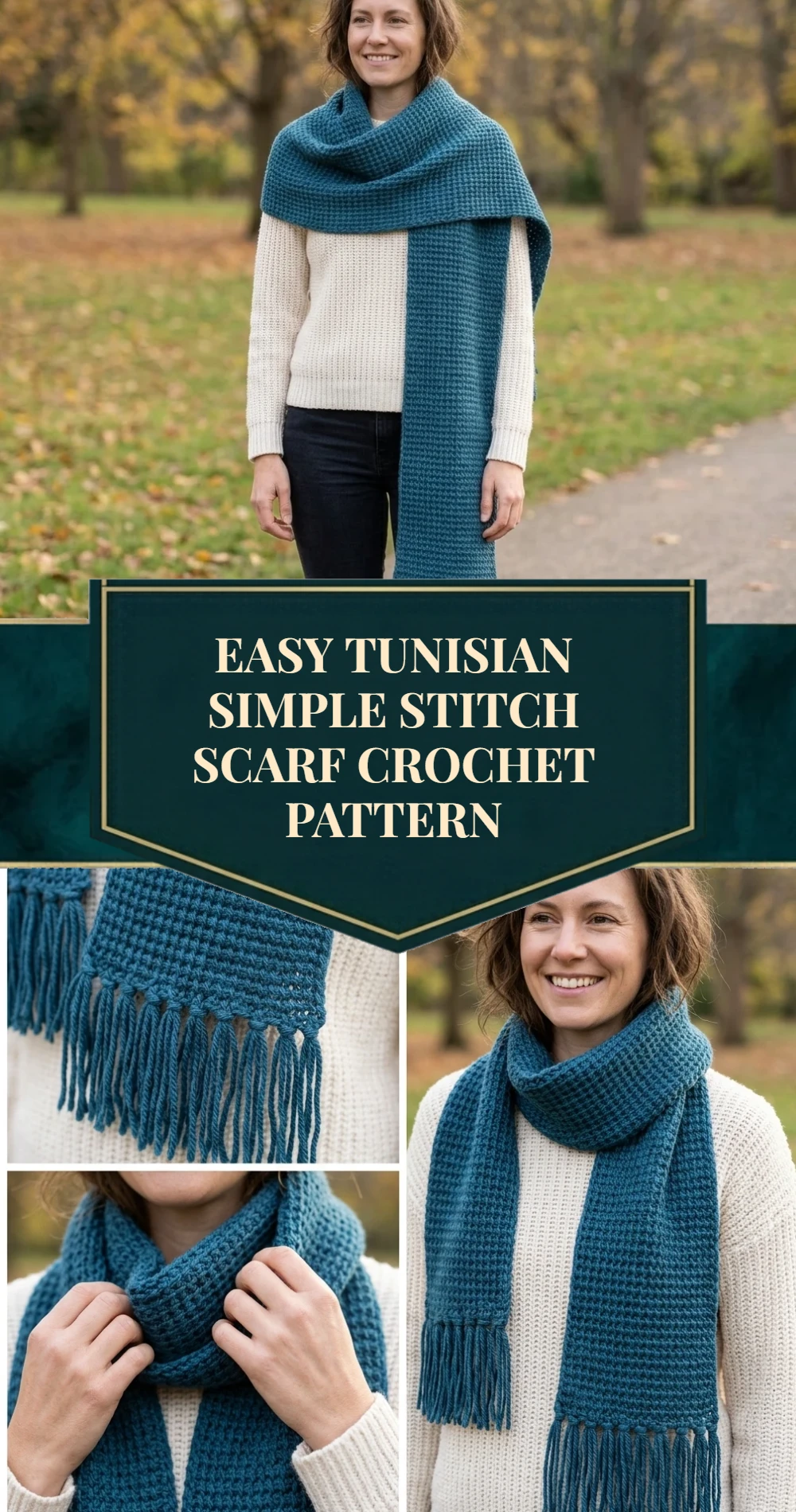
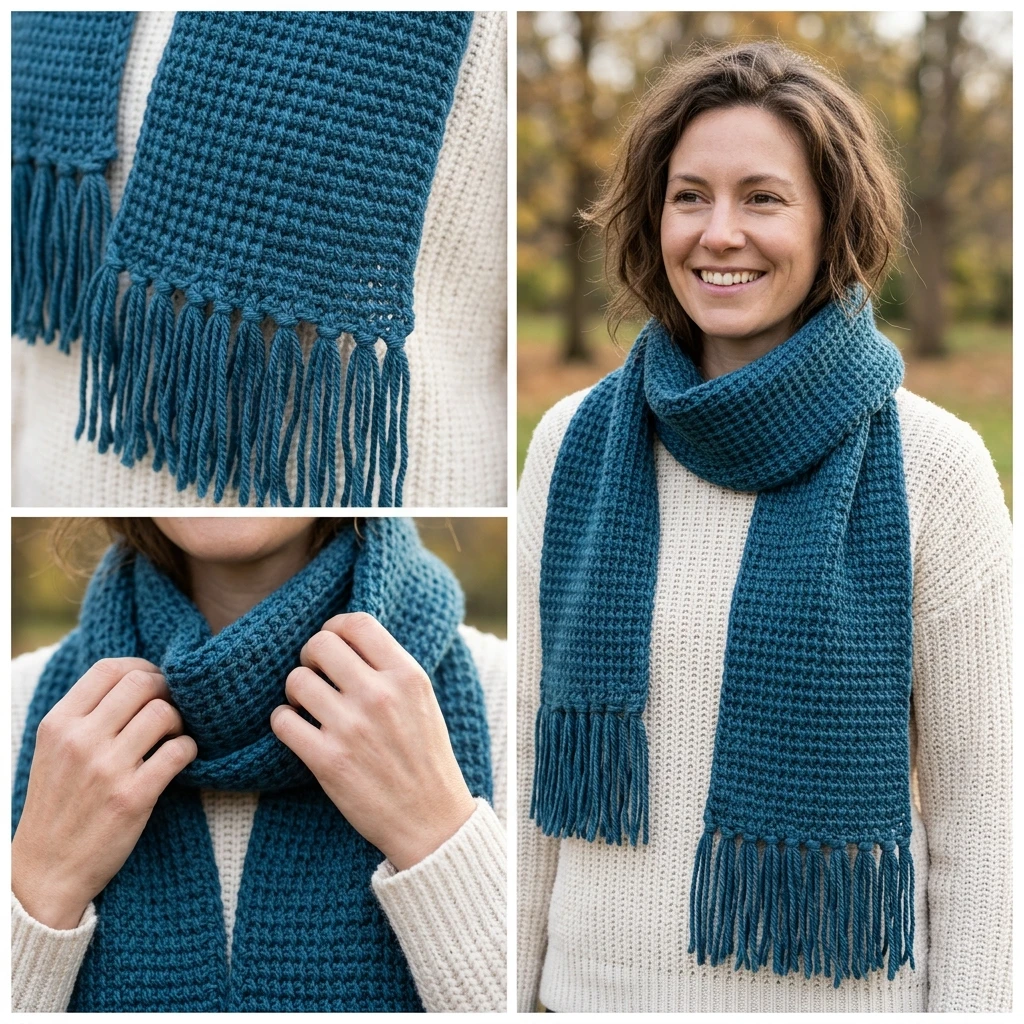

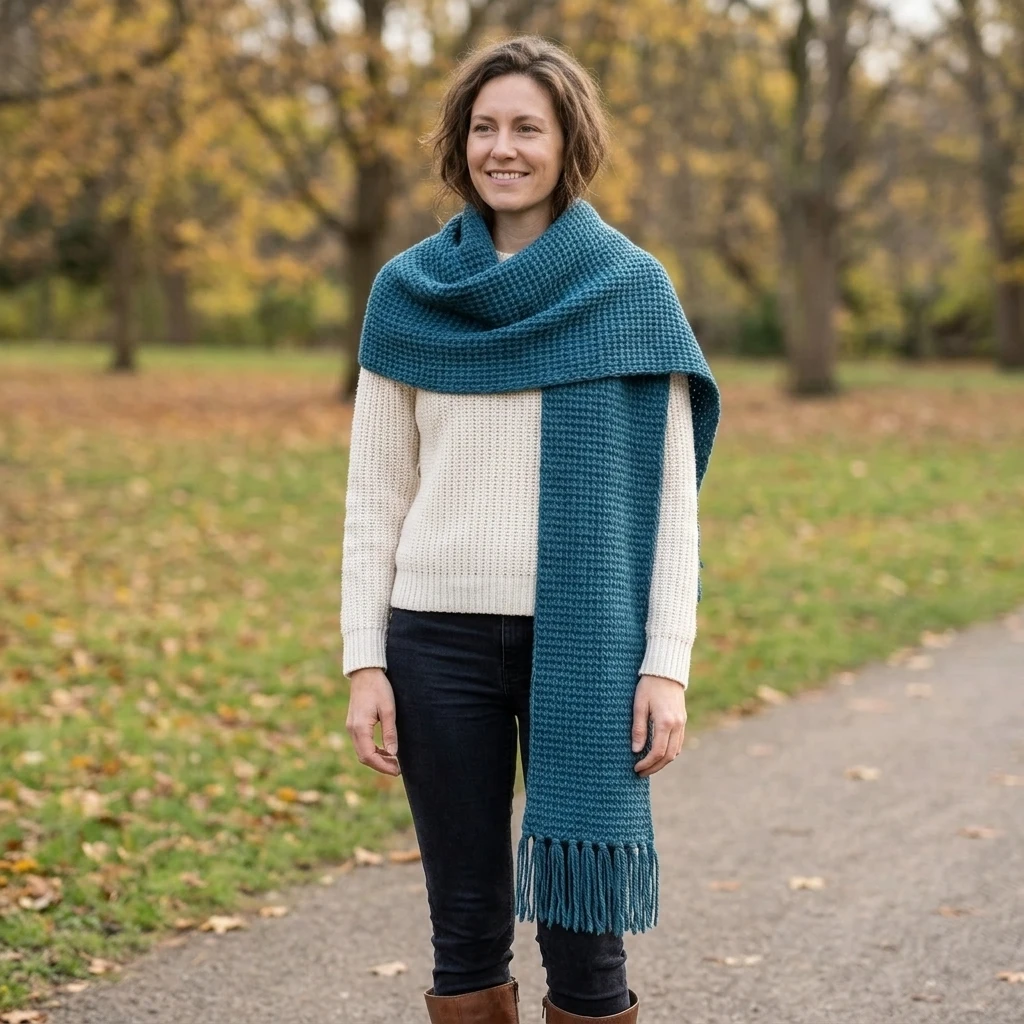
Imagine a scarf that combines the structural integrity of a woven textile with the rhythmic, meditative flow of crochet. The Easy Tunisian Simple Stitch Scarf is the quintessential introductory project for those looking to expand their fiber arts repertoire beyond traditional stitches. This accessory features a dense, squishy fabric that provides exceptional warmth, making it a staple for cold-weather wardrobes. Its minimalist aesthetic suits everyone, from modern urbanites to those who prefer a classic rustic look. Constructed as a straightforward rectangle with no complex increases or decreases, this pattern allows you to focus entirely on mastering the unique “forward” and “return” passes that define the Tunisian technique.
The Design: What Makes This Pattern Different
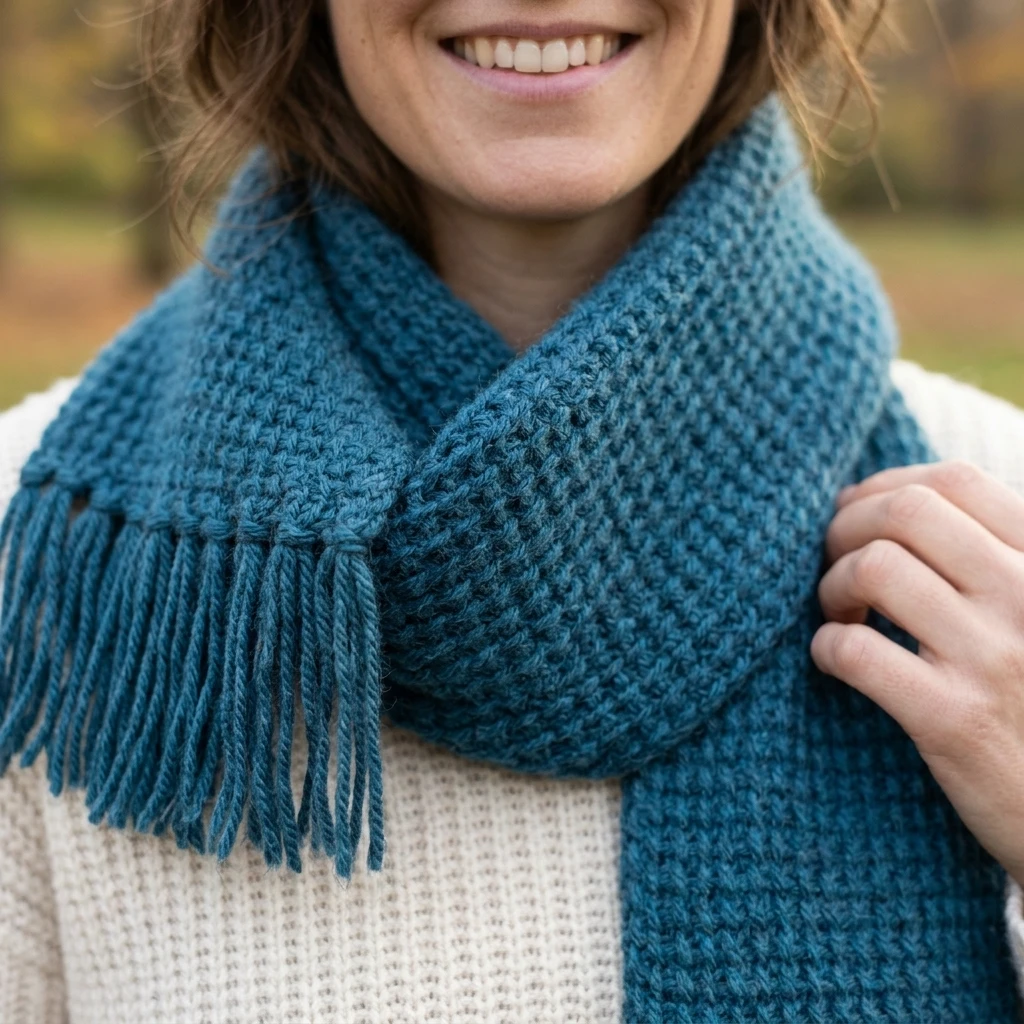
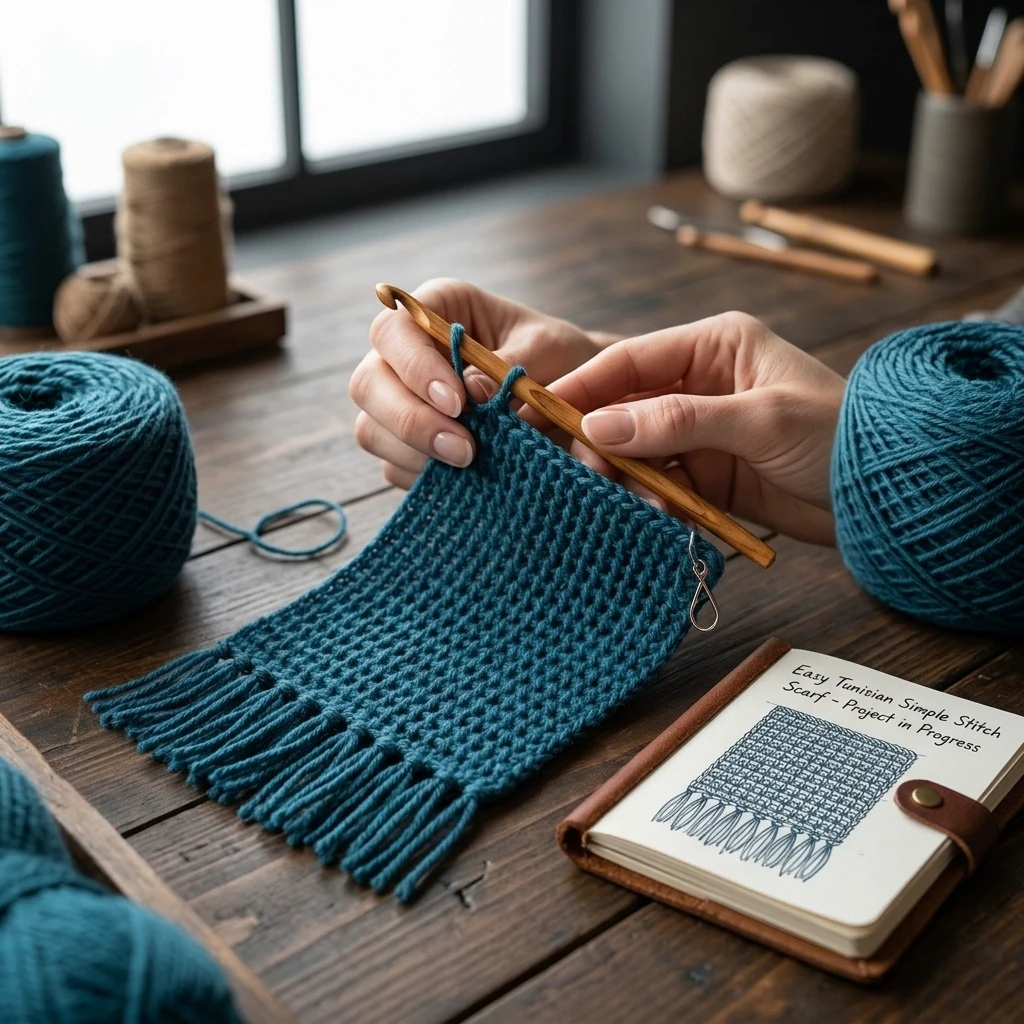
The visual identity of this scarf lies in the “grid” pattern created by the Tunisian Simple Stitch (TSS). Unlike standard crochet, where each stitch is completed one at a time, Tunisian crochet keeps all stitches for a row on the hook simultaneously, much like knitting. This results in a fabric that is thicker and less elastic than traditional crochet, providing a sophisticated, high-end look that mimics a fine weave.
Structurally, we have designed this scarf to include a clean “V” border on both edges to prevent the ragged look often found in beginner projects. One common mistake to avoid is working with a hook that is too small. Tunisian crochet is notorious for curling at the bottom and sides; choosing a hook at least two sizes larger than what is recommended on the yarn label is the secret to a soft, drapeable scarf rather than a stiff board.
Project Info at a Glance
| Feature | Details |
|---|---|
| Skill Level | Beginner / Advanced Beginner |
| Estimated Time | 6 – 8 Hours |
| Finished Size | Approx. 6″ wide x 65″ long (suggested) |
| Hook Size | 6.5mm (K) Tunisian Crochet Hook with cable |
| Yarn Weight | Medium / Worsted (Weight 4) |
| Gauge | 14 TSS x 12 rows = 4″ (photo-inspired estimate) |
| Best For | Winter layering, gift-giving, and learning basics |
Materials and Tools
Yarn
For this project, you will need approximately 400 to 450 yards of a smooth, worsted weight yarn. Natural wool blends or high-quality acrylics work best to highlight the stitch definition. Avoid highly textured or “fuzzy” yarns for your first Tunisian project, as they can make it difficult to see the vertical bars where you need to insert your hook.
Tools
You will require a Tunisian crochet hook (also known as an Afghan hook) that is at least 10 inches long, or a hook with a flexible cable attachment. Additionally, have a tapestry needle ready for weaving in ends and a pair of sharp embroidery scissors.
Abbreviations
- ch: Chain
- st(s): Stitch(es)
- yo: Yarn over
- FwP: Forward Pass
- RetP: Return Pass
- TSS: Tunisian Simple Stitch
- sl st: Slip stitch
- Lts: Last Tunisian Stitch (Edge stitch)
Pattern — Step by Step
Construction Overview
This scarf is worked flat in rows. Each “row” in Tunisian crochet consists of two parts: the Forward Pass (where you pick up loops and keep them on the hook) and the Return Pass (where you work the loops off the hook). You never turn your work; the right side is always facing you.
The Foundation Row
- Foundation Chain: Ch 22 (or any number to reach your desired width).
- Foundation FwP: Insert hook into the second ch from hook, yo and pull up a loop. Leave the loop on the hook. *Insert hook into next ch, yo and pull up a loop; repeat from * across to the end. You should have 22 loops on your hook.
- Foundation RetP: Yo, pull through 1 loop on hook (this creates the edge ch). *Yo, pull through 2 loops on hook; repeat from * until only 1 loop remains on the hook.
The Scarf Body
- Row 2 (FwP): The loop on your hook counts as the first TSS. Skip the first vertical bar. *Insert hook from right to left under the next front vertical bar, yo and pull up a loop; repeat from * until 1 st remains.
- Row 2 (Lts/Edge): For the last stitch, insert hook under both the front and back loops of the edge stitch to create a firm border. Yo and pull up a loop (22 loops on hook).
- Row 2 (RetP): Yo, pull through 1 loop. *Yo, pull through 2 loops; repeat from * until 1 loop remains.
- Subsequent Rows: Repeat steps 4 through 6 until the scarf reaches 65 inches or your desired length.
Binding Off
- Bind Off Row: Skip the first vertical bar. *Insert hook under the next vertical bar as if to TSS, yo and pull through the bar AND the loop on the hook (sl st completed). Repeat from * across the row. Fasten off yarn, leaving a 6-inch tail.
Assembly
Because this scarf is worked in one continuous piece, assembly is minimal and focuses on finishing the edges and adding optional flair to the ends of the rectangle.
- Weave in Ends: Use a tapestry needle to weave the starting and ending yarn tails into the back of the TSS “grid.” Follow the path of the horizontal bars for the most invisible finish.
- Steam Blocking: Tunisian Simple Stitch tends to curl at the foundation. Pin the scarf out flat on a blocking mat and use a garment steamer or the steam setting on an iron (held 2 inches away) to relax the fibers.
- Optional Fringe: Cut 44 lengths of yarn, each 12 inches long. Group them in pairs and use your crochet hook to larks-head knot them into the spaces along the foundation chain and the bind-off edge for a classic finished look.
7 Technical Tips for a Better Easy Tunisian Simple Stitch Scarf Crochet Pattern
- Choose a Larger Hook: Always go up 1mm to 2mm from the hook size recommended on the yarn ball band to ensure the fabric remains supple.
- Master the Edge: When working the last stitch of the Forward Pass, always go through both loops of the edge “V” to prevent the side of the scarf from looking gappy.
- Keep Tension Loose: Beginners often pull the Return Pass too tight. Focus on making the “yo, pull through 2” motion consistent and relaxed.
- The Curl is Normal: Do not panic if your scarf looks like a scroll in the beginning. Blocking and a proper bind-off will fix most of this.
- Counting Loops: Always count your loops at the end of every Forward Pass. It is very easy to accidentally skip the last stitch or add an extra one at the start.
- Avoid Splitting Yarn: Because you are sliding the hook behind vertical bars, use a hook with a slightly blunt head to avoid snagging the plies of the yarn.
- Yarn Selection: If this is your first time, use a light-colored yarn. It is significantly easier to see the vertical bars in cream or yellow than in navy or black.
Frequently Asked Questions
Why is my Tunisian scarf curling so much?
Curling is a natural characteristic of the Tunisian Simple Stitch because it places more tension on the front of the fabric than the back. To minimize this, use a larger hook and be sure to block your finished project thoroughly.
Can I use a regular crochet hook for this scarf?
You can only use a regular hook if the scarf is very narrow (like a headband). For a full-width scarf, you need a Tunisian hook to hold all the stitches on the shaft at once.
How do I know which bar to insert my hook into?
In TSS, you always look for the vertical bars that stand up on the surface of the work. You insert your hook under the front vertical bar from right to left.
Is Tunisian crochet faster than regular crochet?
Once you find your rhythm, it is comparable in speed. However, because each row requires two passes (Forward and Return), it may initially feel slower to a beginner.
What happens if I drop a loop off my hook?
If a loop drops during the Forward Pass, you can simply pick it back up with your hook. If it happens during the Return Pass, you may need to carefully frog (unravel) back to that point to secure it.
Conclusion
The Easy Tunisian Simple Stitch Scarf is a rewarding project that bridges the gap between crochet and knitting, resulting in a cozy, professional-looking accessory. By focusing on consistent tension and using the right tools, you can create a high-quality scarf that looks much more complex than it actually is. Don’t forget to save this tutorial to your Crochet Basics board on Pinterest so you can refer back to the stitch guide. Have you ever tried Tunisian crochet before, or is this your very first time picking up an Afghan hook?
Save This Crochet Pattern