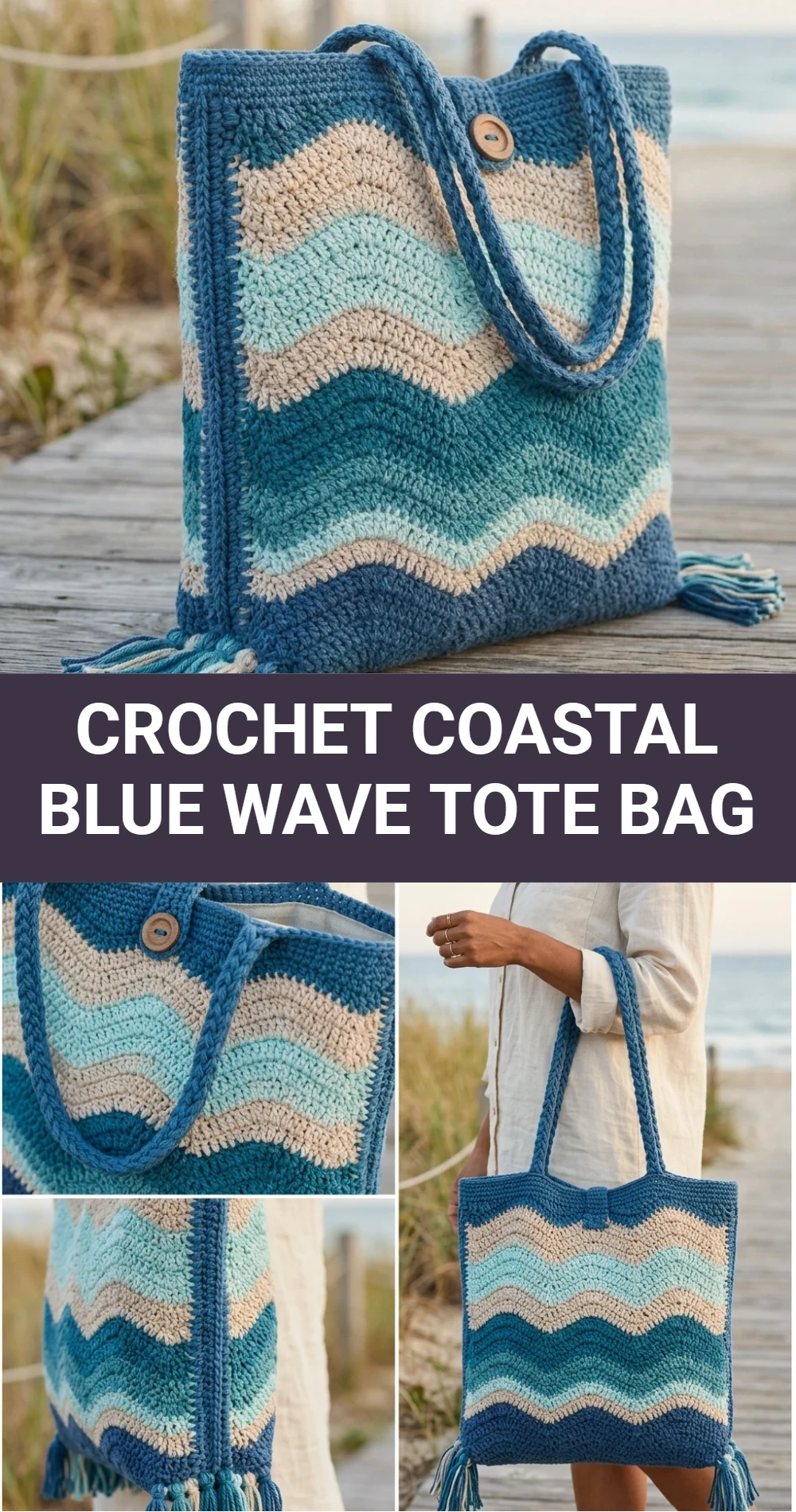
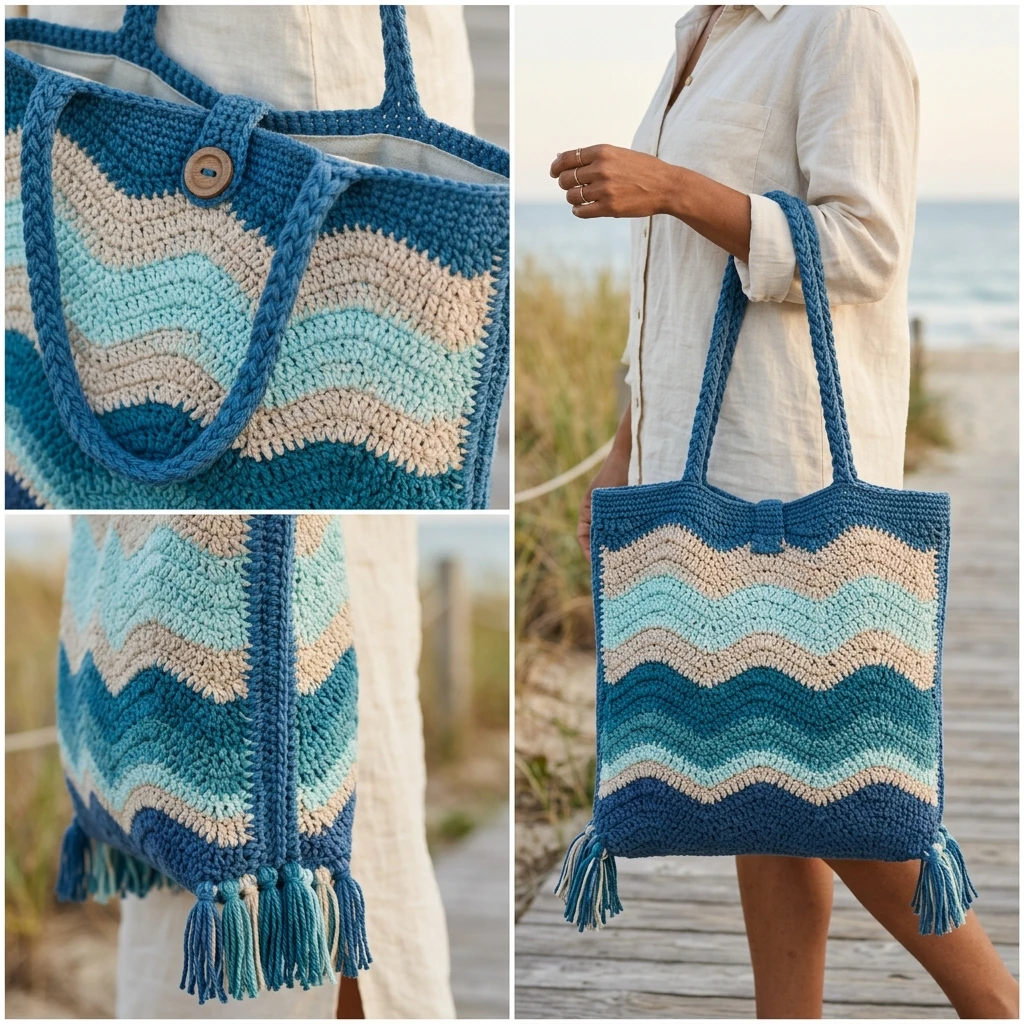

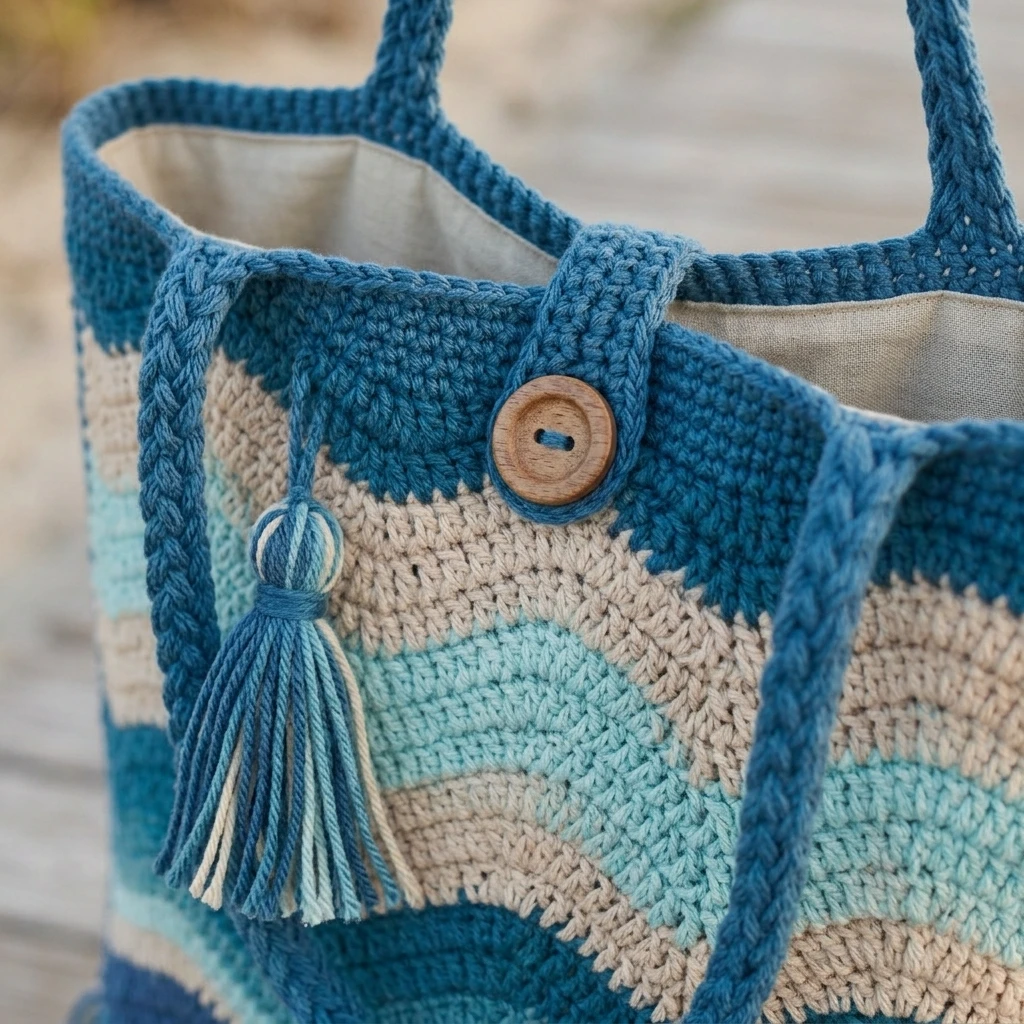
The Crochet Coastal Blue Wave Tote Bag is a stunning functional accessory that captures the rhythmic movement of the ocean through its distinctive ripple textures. Designed with a sturdy rectangular base and transitioning into an elegant chevron body, this tote is the perfect companion for seaside excursions, weekend farmers’ markets, or a chic everyday carry-all. Its visual identity is defined by a gradient of oceanic hues—ranging from deep navy to soft seafoam—making it a sophisticated project for those who love nautical aesthetics and geometric stitch patterns.
The Design: What Makes This Pattern Different
This design prioritizes structural integrity alongside its flowing aesthetic. Unlike many crochet totes that stretch excessively when loaded, this wave pattern utilizes a dense ripple stitch that minimizes vertical “give.” The transition from a solid, single-crochet base to the double-crochet wave body creates a firm foundation that prevents sagging. A common mistake to avoid with this specific pattern is failing to count the “peaks” and “valleys” of the waves; skipping a single increase or decrease will cause the bag’s circumference to shrink or grow unevenly, resulting in a distorted silhouette rather than a perfectly straight-sided tote.
Project Info at a Glance
| Skill Level | Intermediate (due to ripple shaping) |
|---|---|
| Estimated Time | 10 – 15 Hours |
| Finished Size | Approximately 15″ wide x 14″ tall (excluding straps) |
| Hook Size | 5.0 mm (US H/8) |
| Yarn Weight | Worsted (Weight 4) Cotton or Cotton Blend |
| Gauge | 16 sts x 9 rows = 4″ in wave pattern (suggested) |
| Best For | Beach trips, grocery shopping, or yarn storage |
Materials and Tools
Yarn
To achieve the coastal look, we suggest a high-quality 100% cotton yarn. Cotton is preferred over acrylic for this project because it provides the necessary stiffness to hold the bag’s shape. Estimated quantities based on the photo-inspired design:
- Color A (Deep Navy): 200 yards
- Color B (Royal Blue): 180 yards
- Color C (Sky Blue): 180 yards
- Color D (Cream or Sand): 150 yards
Tools
In addition to your yarn, you will need a 5.0 mm crochet hook which balances stitch definition with a fabric that isn’t too stiff. A tapestry needle is essential for weaving in the numerous ends created by color changes. Use at least four stitch markers to track the start of rounds and the peak of your waves.
Abbreviations
- ch: chain
- sc: single crochet
- dc: double crochet
- dc2tog: double crochet two together (decrease)
- st(s): stitch(es)
- sk: skip
- sl st: slip stitch
- rep: repeat
Pattern — Step by Step
The Foundation Base
The base is worked in continuous rounds of single crochet to create a dense, flat rectangle. This provides a stable floor for the tote bag.
- Ch 31.
- Round 1: Sc in 2nd ch from hook and in each ch across. Work 3 sc in the last ch to turn the corner. Work along the opposite side of the foundation chain, sc in each ch, working 2 sc in the final ch. (64 sts)
- Rounds 2–8: Continue working in rounds, increasing 4 sts at the corners of each round until the base measures approximately 12″ x 4″.
The Coastal Wave Body
The body shifts to a ripple stitch. The wave is created by placing multiple stitches in one “peak” and decreasing stitches in the “valley.” Ensure you change colors every 4 rows to achieve the striped coastal effect.
- Round 1 (Set-up): Ch 2 (does not count as st), dc in each st around, adjusting the count to a multiple of 12 or 14 depending on your desired wave width.
- Round 2 (Wave Row): *2 dc in next st, dc in next 3 sts, dc2tog twice, dc in next 3 sts, 2 dc in next st; rep from * around. Sl st to join.
- Rounds 3–24: Repeat Round 2, alternating colors as suggested. The peaks should align perfectly row over row.
Top Border and Straps
The top is finished with several rounds of sc to stabilize the wavy edge before the handles are added.
- Round 25: Ch 1, sc in each dc around. Note: You may need to work a hdc in the “valleys” and a sc in the “peaks” to level out the top edge if you prefer a flat opening.
- Rounds 26–28: Sc in each st around.
Assembly
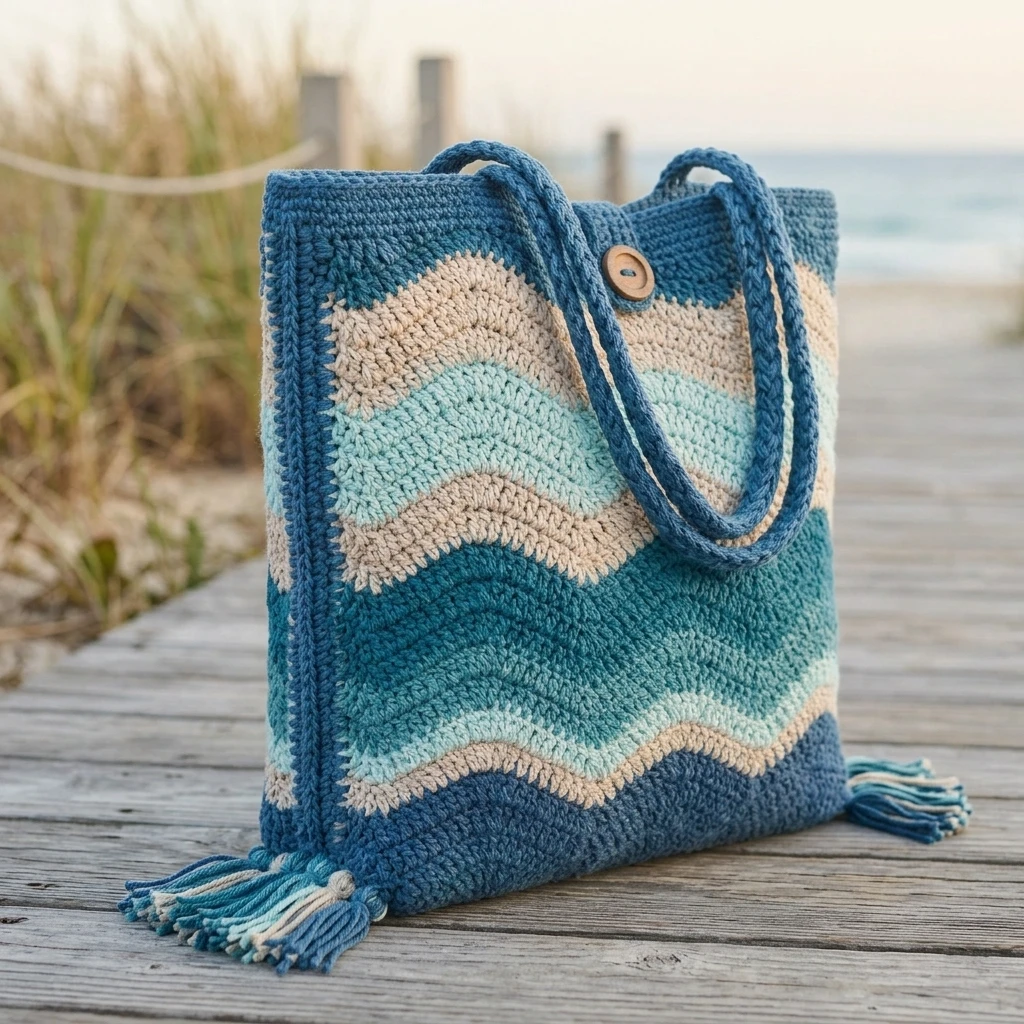
Proper assembly ensures your tote handles can support the weight of your beach gear without snapping or stretching the body of the bag.
- Weave in Ends: Use your tapestry needle to secure all color change tails on the inside of the bag.
- Handle Placement: Lay the bag flat. Mark two points on the front and two on the back, roughly 4 inches from the side edges.
- Attach Straps: Crochet two long straps (approximately 24″ each) using a foundation sc for strength. Sew the ends securely to the marked points using a “box stitch” pattern with the tapestry needle for maximum durability.
- Optional Lining: For a professional finish, sew a simple cotton fabric liner and insert it into the bag, whip-stitching it to the top sc border.
7 Technical Tips for a Better Crochet Coastal Blue Wave Tote Bag
- Check Your Gauge: Since this is a bag, exact gauge isn’t vital for fit, but if your stitches are too loose, items will poke through the waves.
- Use Cotton Yarn: Cotton has very little “memory” or stretch, which is vital for a tote that will carry heavy items like water bottles or books.
- The Invisible Join: When changing colors at the end of a round, finish the last dc with the new color to make the transition seamless.
- Peak Protection: Place a stitch marker in the center of your 2-dc increase. This helps you visually track the wave’s path.
- Steam Block: Once finished, steam block your bag to open up the ripple pattern and help the base lie perfectly flat.
- Reinforce the Straps: If you plan to carry heavy loads, consider crocheting around a piece of nylon cord for the handles.
- Tension Control: Keep a slightly tighter tension on the base than on the body to ensure the bottom of the bag remains sturdy.
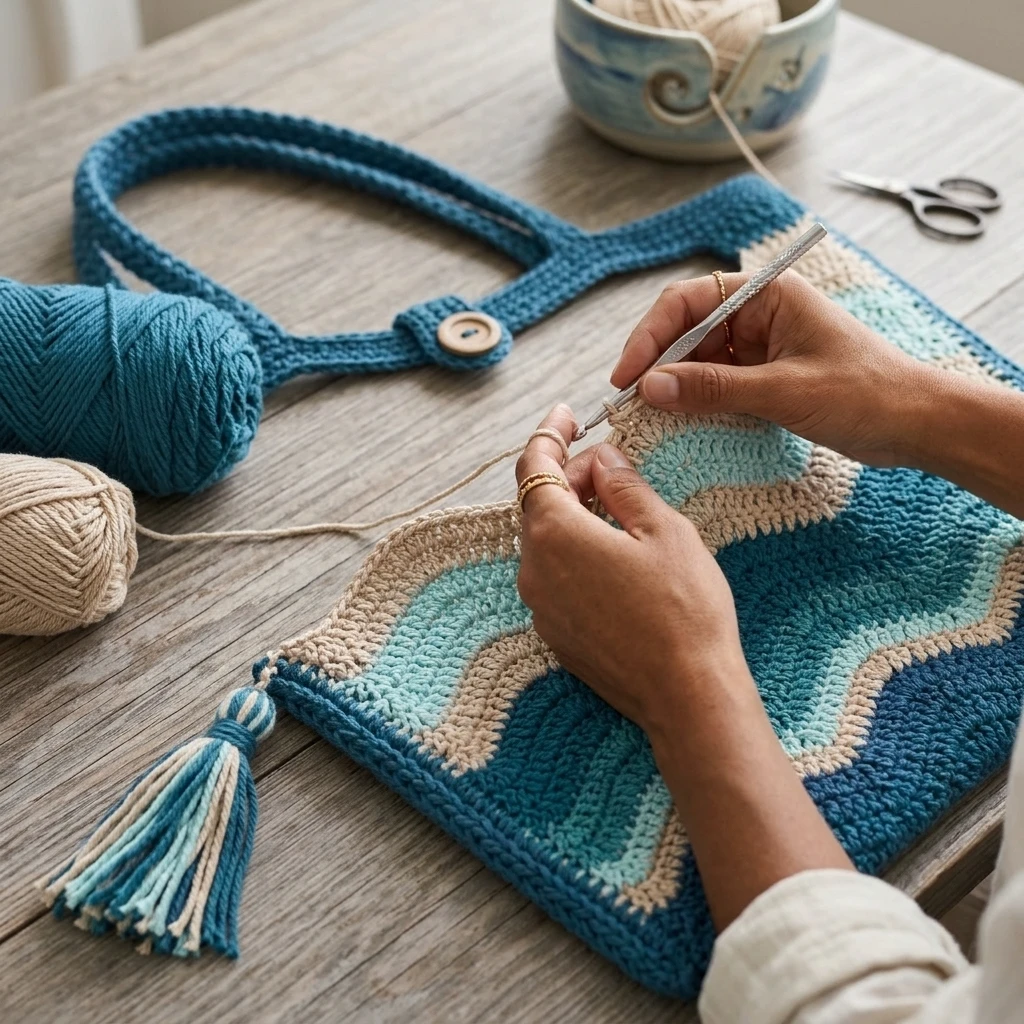
Frequently Asked Questions
Can I use a different yarn weight?
Yes, you can use bulky yarn for a larger, “chunky” look, but you will need to adjust your starting chain and hook size. Keep in mind that a heavier yarn will result in a much heavier bag.
How do I stop the bag from stretching?
The best way to prevent stretching is to use 100% cotton and to add a fabric lining. If you don’t want to line it, using a smaller hook than recommended for the yarn will create a tighter, more stable fabric.
Is the wave pattern reversible?
Yes! This ripple stitch looks nearly identical on both sides, making it perfect for a bag where the interior might be visible.
How do I clean my Coastal Tote?
Since it is made of cotton, you can hand wash it in cool water with mild detergent. Lay it flat on a towel to dry to ensure it maintains its shape.
What if my wave count is off?
If you find you have an extra stitch at the end of a round, it is better to “dc2tog” into the valley than to add an extra stitch to a peak. This keeps the wavy silhouette more consistent.
Conclusion
The Crochet Coastal Blue Wave Tote Bag is a rewarding project that blends rhythmic stitch work with practical utility. By mastering the ripple stitch and selecting a sturdy cotton yarn, you create an accessory that is as durable as it is beautiful. Don’t forget to experiment with different shades of blue to make the design uniquely yours!
Love this nautical look? Save this project to your Crochet Inspiration board on Pinterest!
What colors would you use to represent your favorite coastline?
Save This Crochet Pattern