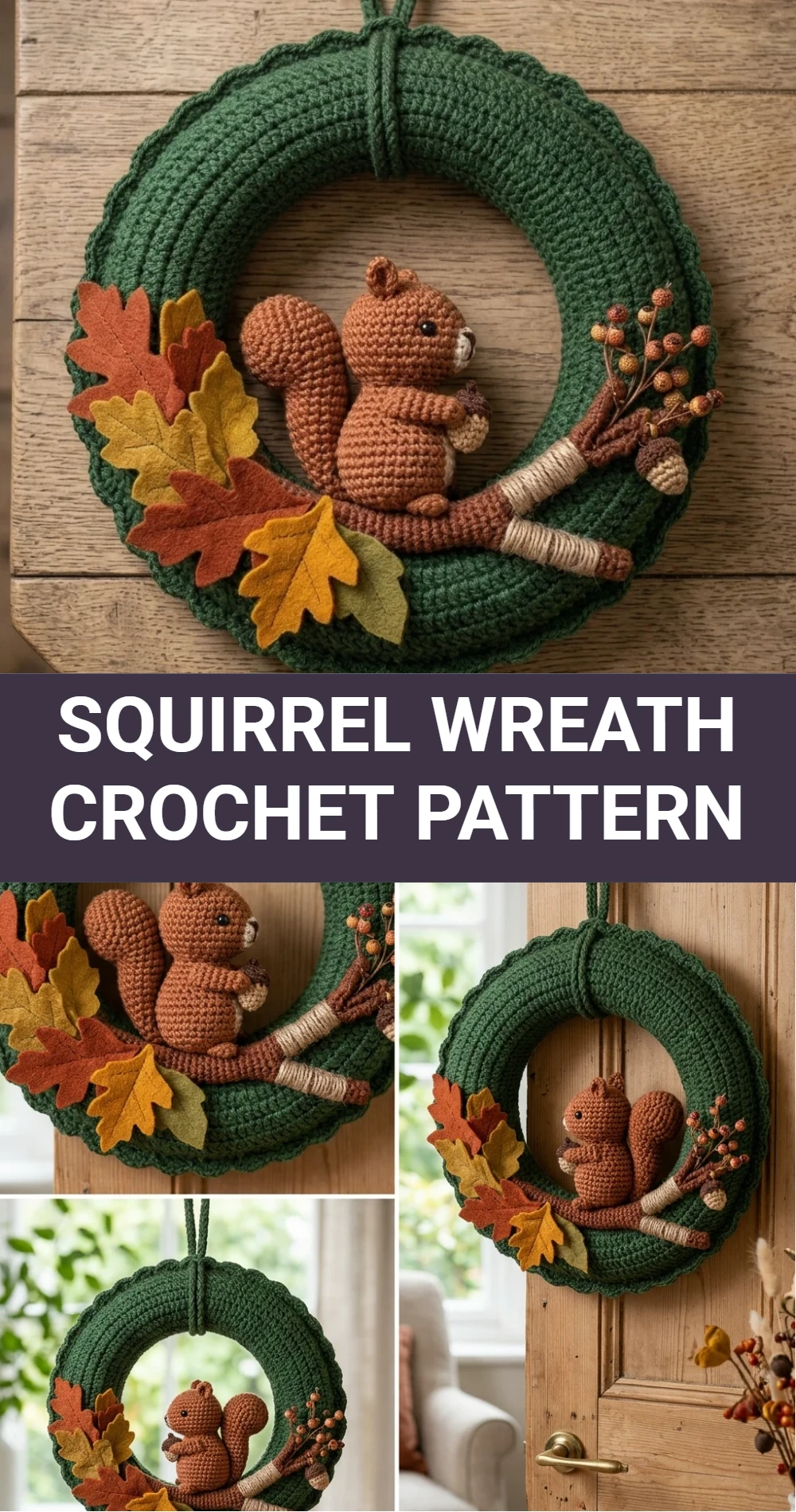
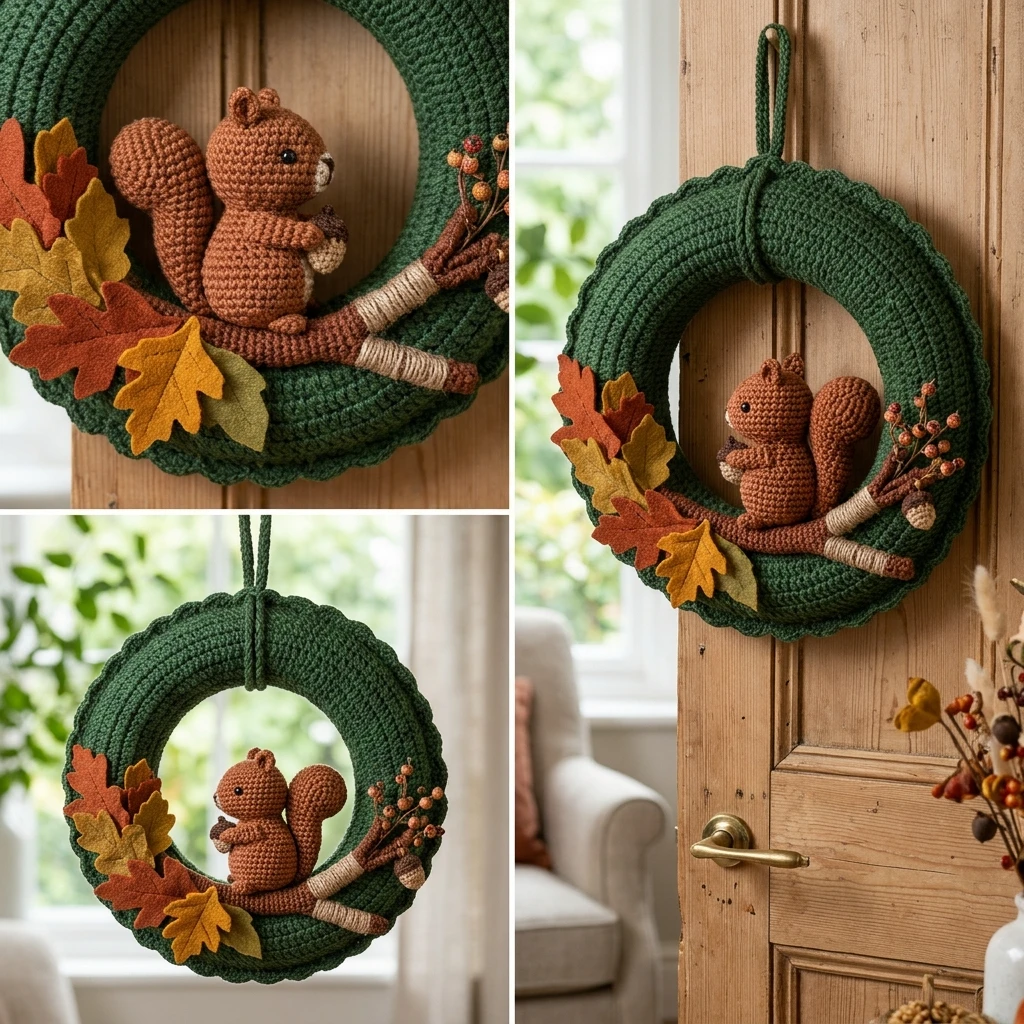

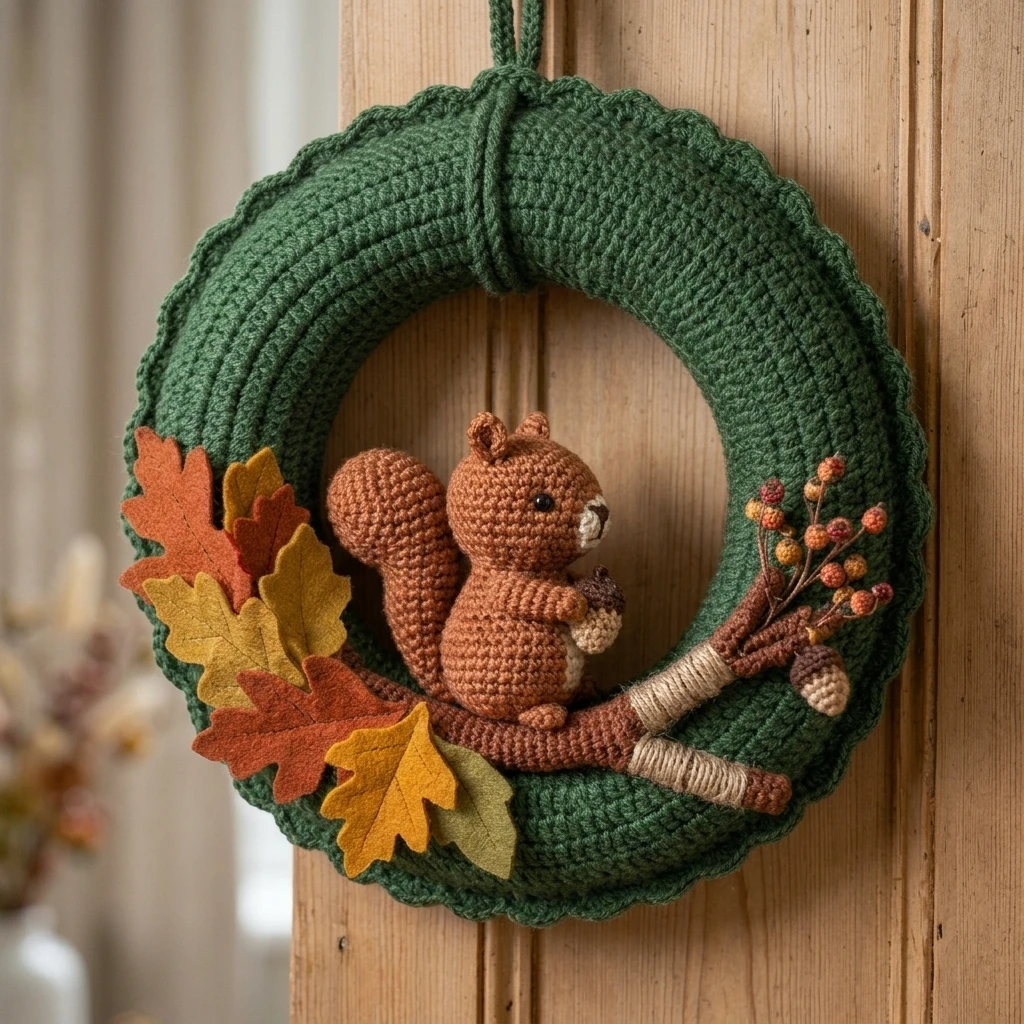
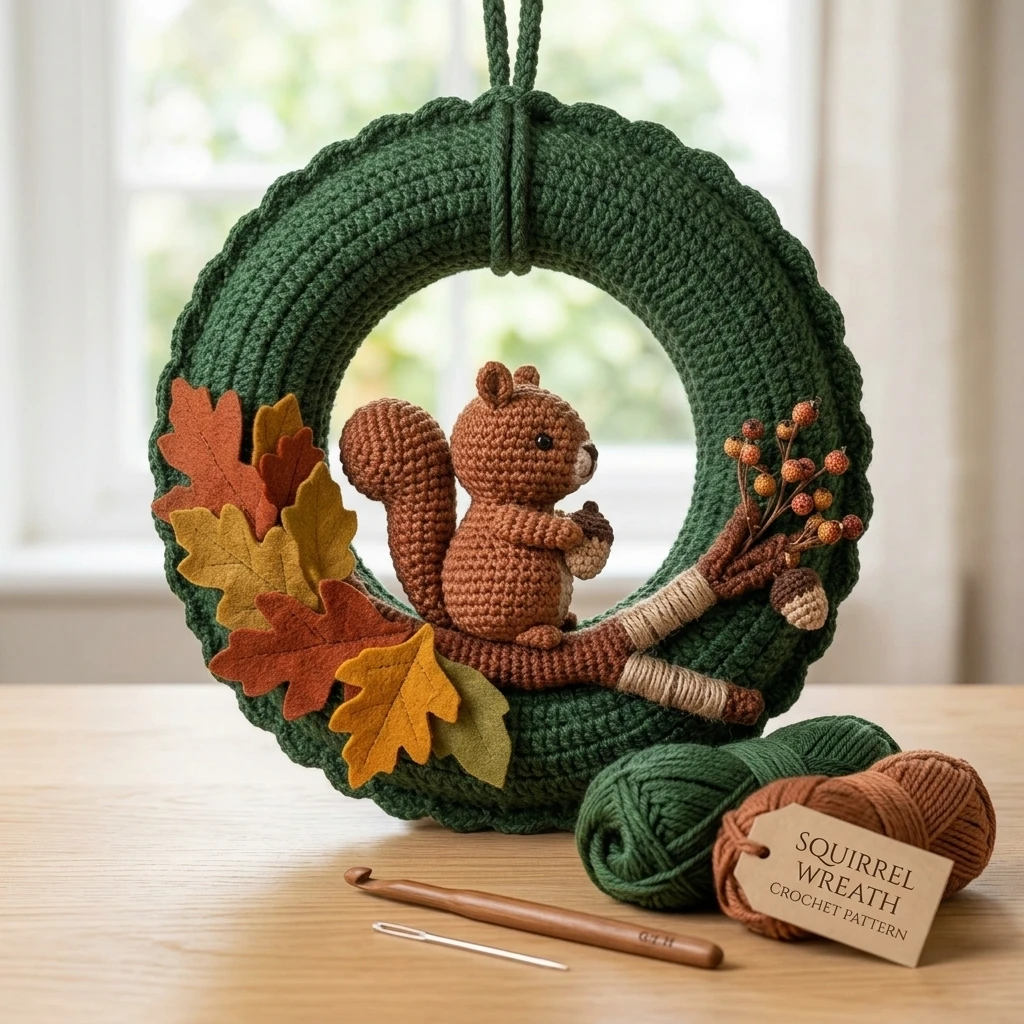
Capture the whimsical essence of a woodland autumn with the Squirrel Wreath Crochet Pattern. This project transforms a standard wreath base into a vibrant scene featuring adorable amigurumi squirrels, textured oak leaves, and plump acorns. Perfect for door decor or a cozy nursery accent, the design balances the rustic charm of the outdoors with the softness of handmade crochet. The construction typically involves a crocheted sleeve that fits snugly over a foam wreath form, providing a clean canvas for the sculptural elements to be attached securely.
The Design: What Makes This Pattern Different
Unlike flat door hangers, this pattern emphasizes three-dimensional storytelling. The squirrels are designed with a focus on their iconic bushy tails, often achieved through loop stitches or brushed-out acrylic yarn to mimic fur. Structurally, the wreath cover is worked in rows to ensure a seamless wrap-around fit, while the decorative elements utilize tight amigurumi tension to maintain their shape. One common mistake to avoid is stuffing the squirrels too heavily; because they are mounted on a vertical surface, excessive weight can cause the wreath to tilt or the fabric of the cover to stretch and sag over time. Keep the stuffing firm but lightweight.
Project Info at a Glance
| Feature | Details |
|---|---|
| Skill Level | Intermediate |
| Estimated Time | 8–12 Hours |
| Finished Size | 12″ Diameter (Adjustable) |
| Hook Size | 3.5mm (E) and 4.0mm (G) |
| Yarn Weight | Worsted (Medium, Weight 4) |
| Gauge | 18 sc x 20 rows = 4″ (Cover) |
| Best For | Home Decor / Seasonal Gifting |
Materials and Tools
Yarn
For a realistic woodland look, choose high-quality acrylic or cotton-blend yarns in earthy tones. You will need approximately 200 yards of a base color (like forest green or cream) for the wreath cover. For the squirrels, acorns, and leaves, suggested amounts include 100 yards of rusty orange or brown, 50 yards of tan for the bellies/acorn nuts, and small scraps of dark brown and moss green for the accents.
Tools
A 12-inch polystyrene or foam wreath form is essential for maintaining the circular shape. You will also need a tapestry needle for assembly, sharp scissors, and premium polyester fiberfill. To add life to the squirrels, use 6mm safety eyes and a small amount of black embroidery floss for the noses.
Abbreviations
- ch: Chain
- sc: Single crochet
- inc: Increase (2 sc in one stitch)
- dec: Decrease (sc 2 together)
- hdc: Half double crochet
- dc: Double crochet
- sl st: Slip stitch
- st(s): Stitch(es)
- MR: Magic Ring
Pattern — Step by Step
The Wreath Cover
The cover is worked as a long rectangle. Measure the circumference of your wreath form’s “tube” to determine the width needed.
- Ch 22 (or number needed to wrap around the foam).
- Row 1: Sc in second ch from hook and in each ch across. Turn.
- Row 2: Ch 1, sc in each st across. Turn.
- Repeat Row 2 until the piece is long enough to meet around the outer circumference of the wreath form when stretched slightly.
- Fasten off, leaving a very long tail for sewing.
The Squirrel (Make 2)
Constructed in continuous rounds. Start with the head and body as one piece for stability.
- Rnd 1: 6 sc in MR (6).
- Rnd 2: [Inc] around (12).
- Rnd 3: [Sc, inc] around (18).
- Rnd 4-7: Sc around (18).
- Rnd 8: [Sc, dec] around (12). Stuff head firmly.
- Rnd 9: [Inc] around (24). (Transition to body).
- Rnd 10-15: Sc around (24).
- Rnd 16: [2 sc, dec] around (18).
- Rnd 17: [Sc, dec] around (12). Finish stuffing.
- Rnd 18: [Dec] around (6). Fasten off and weave in ends.
Bushy Tail and Ears
The tail is worked as a separate curved tube. For the “bushy” effect, use the loop stitch for every second round or use a wire pet brush to fray the yarn after completion. The ears are simple triangles: Ch 3, sc in 2nd ch and next, fasten off.
Leaves and Acorns
Acorns: Work 6 sc in MR, inc to 12, work 3 rows, then dec back to 6. Change colors for the “cap” in the last two rounds. Leaves: Ch 10, work a variety of hdc and dc along the chain to create a lobed oak leaf shape.
Assembly
Proper assembly is the difference between a craft project and a professional-grade home accent. Ensure all ends are woven in before beginning the attachment process.
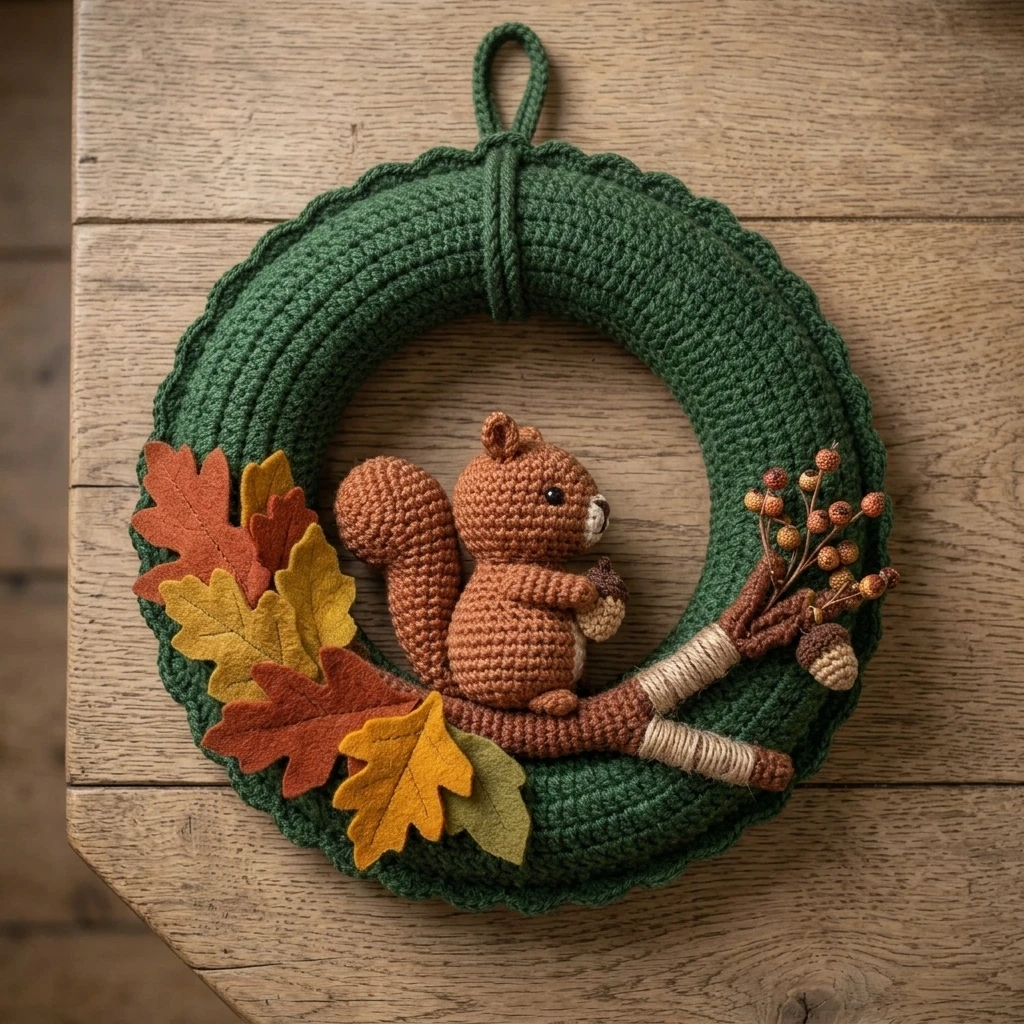
- Wrap the wreath cover around the foam form. Using the long tail and a tapestry needle, whipstitch the two long edges together on the inner side of the wreath.
- Pin the squirrels into position first to find the visual balance. Usually, placing one at “4 o’clock” and another at “8 o’clock” works best.
- Sew the squirrels securely to the cover, ensuring the needle passes through the crochet fabric and slightly into the foam if possible for extra stability.
- Attach the tails, curving them upward toward the squirrels’ heads.
- Scatter the leaves and acorns around the squirrels, using hot glue or small stitches to secure them.
- Create a hanging loop by chaining 15 with the base color and attaching it to the top center.
7 Technical Tips for a Better Squirrel Wreath Crochet Pattern
- Tension Check: Keep your amigurumi stitches very tight so the fiberfill doesn’t peek through, but keep the wreath cover slightly more relaxed so it can stretch over the form.
- Invisible Decreases: Use the invisible decrease method for the squirrels to avoid unsightly gaps in the rounded body sections.
- Tail Support: If the squirrel tails are too heavy, insert a chenille stem (pipe cleaner) inside before closing to allow them to be posed.
- Color Theory: Use a high-contrast color for the wreath cover (like cream or dark navy) to make the orange and brown squirrels pop.
- Symmetry vs. Interest: Don’t feel the need to make everything perfectly symmetrical. An asymmetrical cluster of leaves often looks more organic and professional.
- Blocking: Lightly steam your crochet leaves before attaching them to prevent the edges from curling inward.
- Outdoor Protection: If hanging on a front door, spray the finished piece with a fabric UV protectant to prevent the yarn colors from fading in the sun.
Frequently Asked Questions
What is the best yarn for a wreath?
Acrylic yarn is generally preferred for wreaths because it holds its shape well, is budget-friendly, and resists fading better than natural fibers if exposed to light.
Can I use a different size wreath form?
Yes. Simply adjust the number of rows in your wreath cover. The number of stitches per row (the width) stays the same if the foam thickness is consistent.
How do I make the squirrel tails look fluffy?
The easiest way is to use 100% acrylic yarn and brush it vigorously with a metal pet slicker brush after the tail is crocheted. This breaks the fibers and creates a faux-fur look.
Is this pattern suitable for beginners?
This is best for intermediate crocheters. While the stitches are basic, the assembly and working in small rounds for amigurumi require some experience.
How do I clean the wreath?
Since it contains a foam core, do not submerge it. Use a vacuum attachment to remove dust or spot clean with a damp cloth and mild detergent.
Conclusion
The Squirrel Wreath Crochet Pattern is a rewarding project that brings a touch of nature-inspired artistry into your home. By combining basic amigurumi techniques with simple flat-panel construction, you can create a durable and enchanting piece of decor that lasts for seasons to come. Don’t forget to experiment with different leaf colors to match your specific seasonal theme. If you enjoyed this tutorial, save it to your Crochet Decor board on Pinterest! What color will you make your squirrels—classic grey or autumn red?
Save This Crochet Pattern