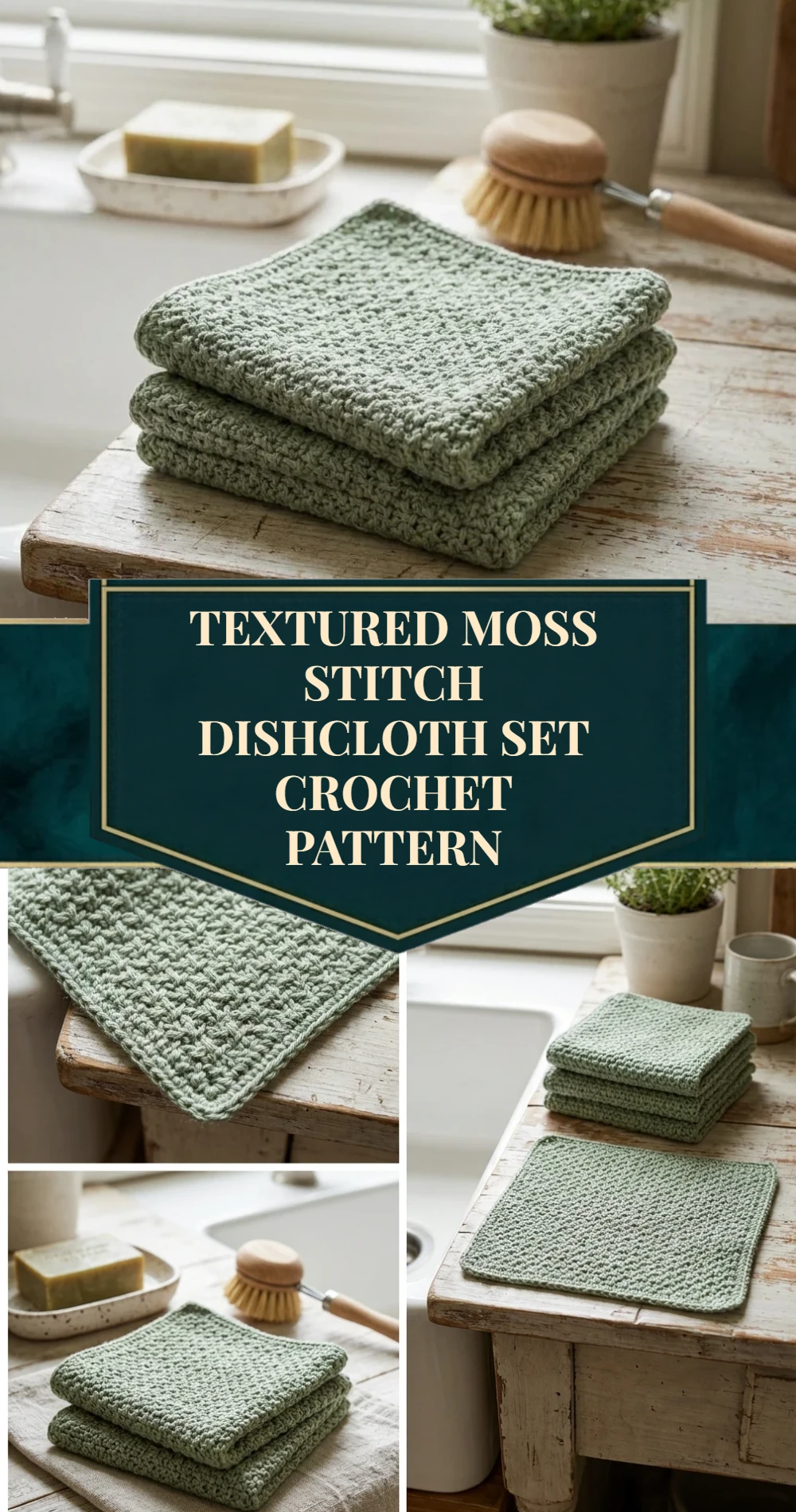
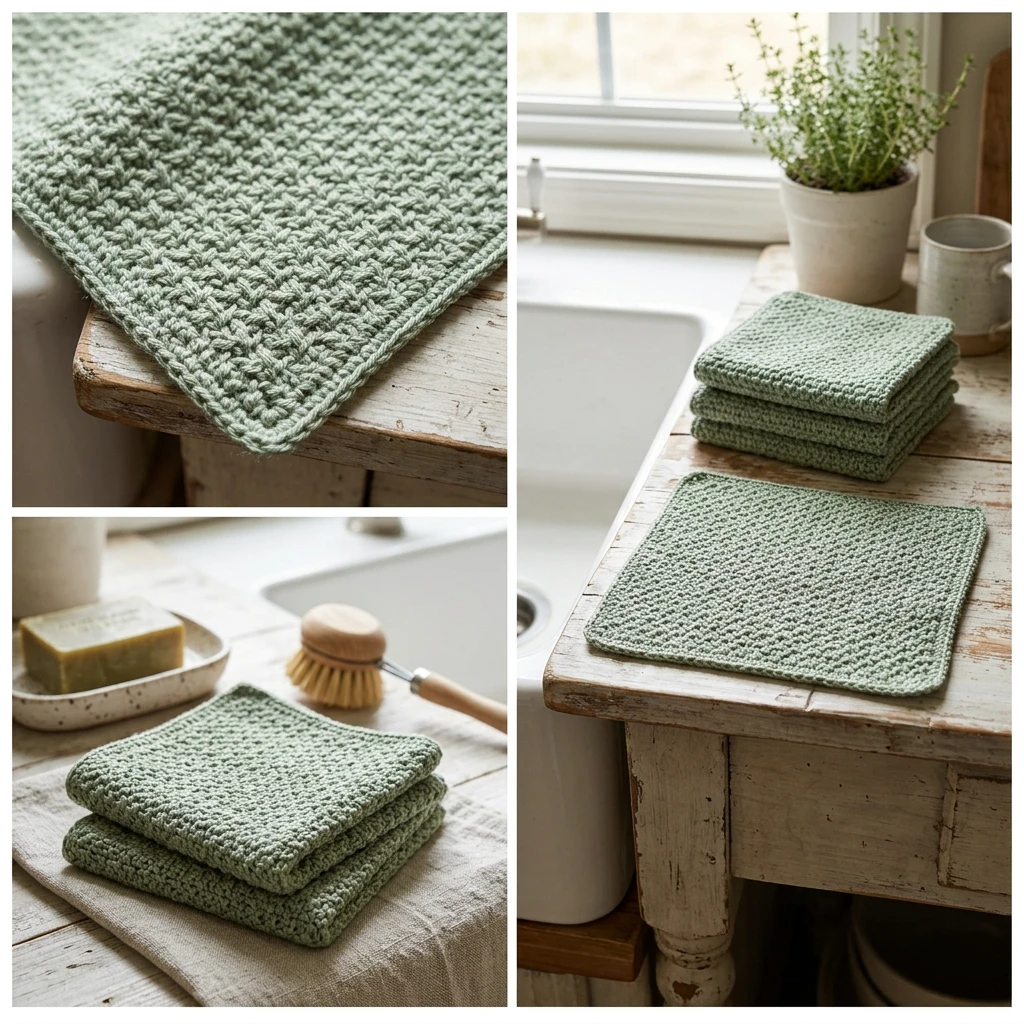

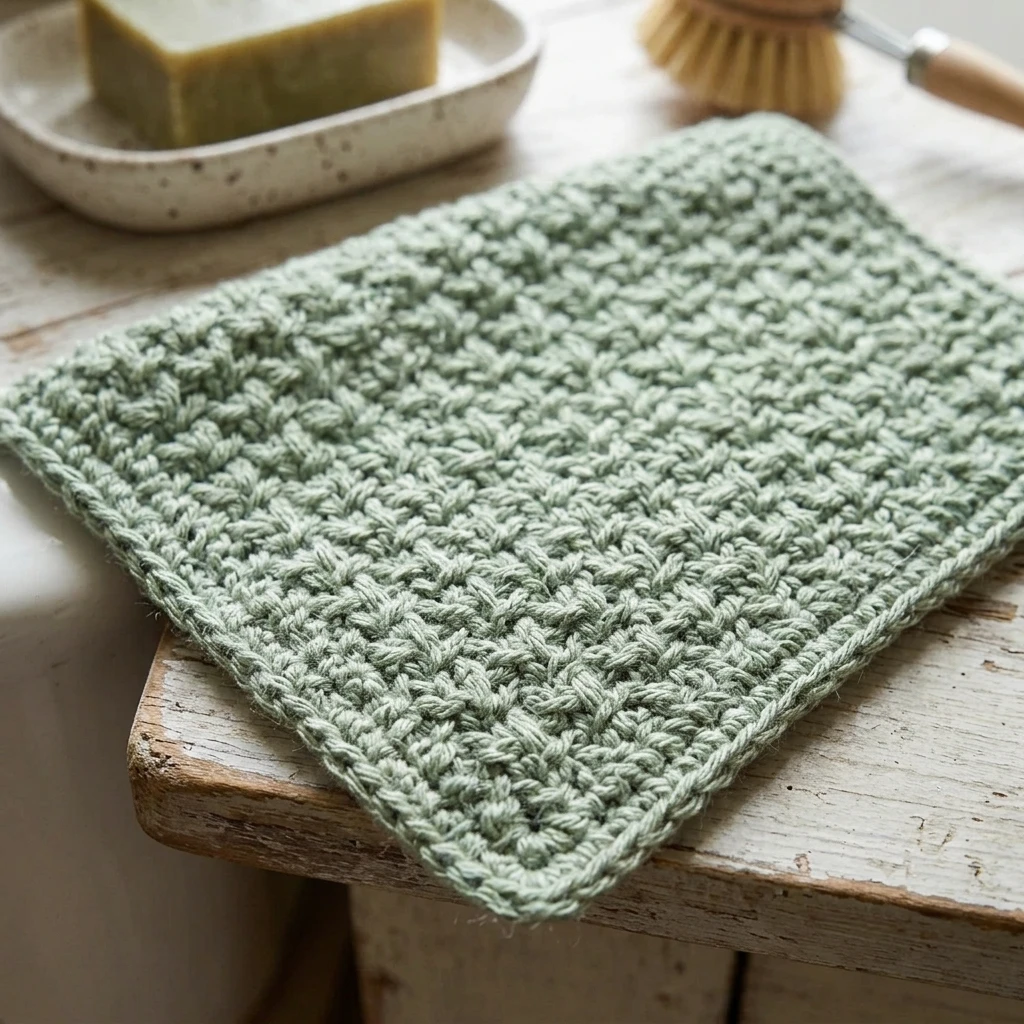
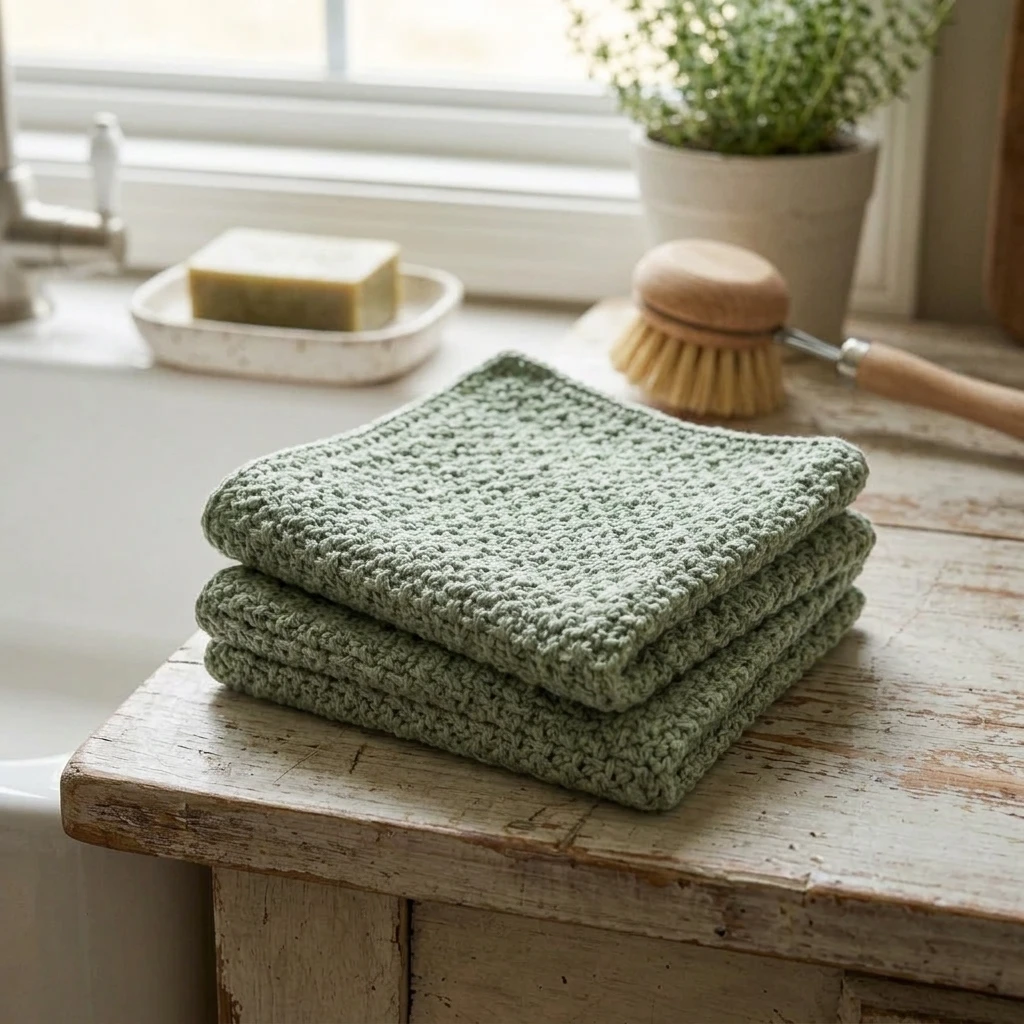
Elevate your kitchen utility with the Textured Moss Stitch Dishcloth Set, a project that marries rhythmic simplicity with high-performance functionality. These dishcloths feature the classic moss stitch—often called the granite or linen stitch—but with a strategic modification to enhance the “scrub-ability” of the fabric. The finished items present a dense, woven-like appearance that looks sophisticated in any modern farmhouse or minimalist kitchen. Designed for crafters who enjoy mindless yet productive stitching, this set is perfect for using up cotton scraps or creating thoughtful, handmade housewarming gifts.
The Design: What Makes This Pattern Different
While a standard moss stitch is prized for its drape and flat surface, this textured variation focuses on structural integrity. By slightly adjusting the tension and incorporating a specific border technique, these dishcloths maintain their square shape even after multiple machine washes. The design uses a specific alternating row height to create subtle ridges that aid in cleaning without being too abrasive for delicate surfaces.
A common mistake to avoid when working this pattern is losing the final stitch of the row. Because the moss stitch ends on a chain space or a single crochet that can sometimes “tuck” under the previous row, many beginners accidentally decrease their stitch count. Always count your single crochets and chain spaces for the first five rows to ensure your edges stay perfectly vertical.
Project Info at a Glance
| Feature | Details |
|---|---|
| Skill Level | Easy / Advanced Beginner |
| Estimated Time | 60–90 minutes per cloth |
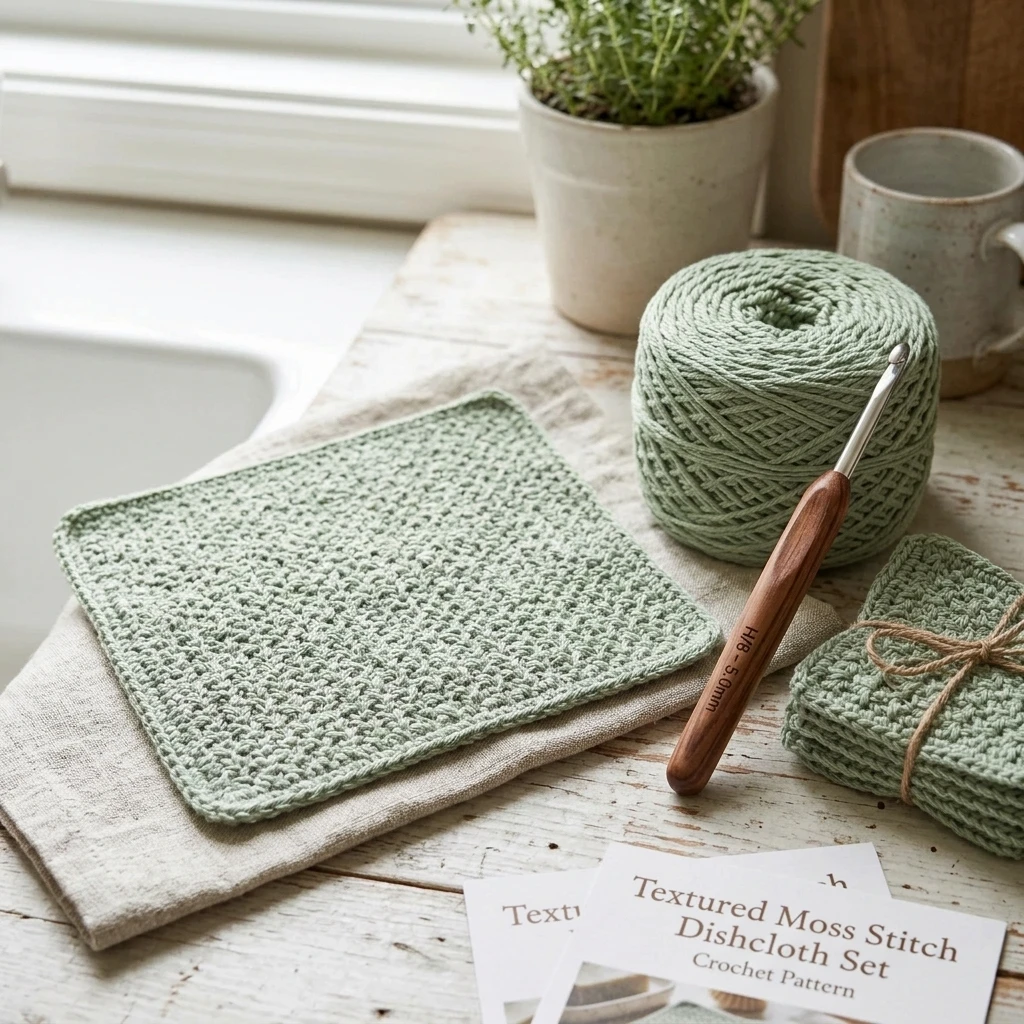
| Finished Size | Approx. 8.5″ x 8.5″ (Photo-inspired) |
| Hook Size | 5.0 mm (H/8) |
| Yarn Weight | Medium (4) Worsted Weight Cotton |
| Gauge | 18 sts x 17 rows = 4″ in Moss Stitch (Suggested) |
| Best For | Kitchen utility, eco-friendly gifting |
Materials and Tools
Yarn
For a standard set of three dishcloths, you will need approximately 200–250 yards of 100% cotton yarn. Cotton is essential for this project due to its absorbency and heat resistance. We recommend using a non-mercerized cotton for better water retention, or a cotton-linen blend for extra durability. Estimated quantities are based on a standard 2.5 oz ball of worsted cotton per cloth.
Tools
You will need a 5.0 mm crochet hook to keep the tension firm but pliable. A larger hook may result in holes that are too wide for effective cleaning. Additionally, keep a tapestry needle handy for weaving in ends and a pair of sharp embroidery scissors.
Abbreviations
- ch: chain
- sc: single crochet
- sk: skip
- st(s): stitch(es)
- ch-sp: chain space
- sl st: slip stitch
- RS: Right Side
Pattern — Step by Step
The Foundation
The dishcloth is worked from the bottom up in flat rows. The texture is achieved by working single crochets into the chain spaces of the row below, creating a staggered, interlocking effect.
1. Foundation: Ch 32 (or any even number to reach your desired width).
2. Row 1: Sc in 4th ch from hook (the skipped chains count as a sc and ch-1), *ch 1, sk 1 ch, sc in next ch; repeat from * across to end. Turn.
3. Row 2: Ch 2 (counts as sc + ch 1), sc in the first ch-1 sp from the previous row. *Ch 1, sk sc, sc in next ch-1 sp; repeat from * across, ending with the last sc placed in the ch-sp created by the turning chain. Turn.
4. Rows 3–30: Repeat Row 2 until the piece is square or reaches approximately 8 inches in height.
5. Final Row: To close the gaps for a cleaner finish, ch 1, sc in first st, sc in ch-1 sp, *sc in next sc, sc in next ch-1 sp; repeat from * to end. Do not fasten off.
The Textured Border
A simple border adds weight to the edges and prevents the cotton from curling.
1. Round 1: Ch 1, work sc evenly around the entire perimeter, placing 3 sc in each corner.
2. Round 2: Sl st in each sc around for a reinforced, “corded” look. Fasten off.
Assembly
The assembly for a dishcloth set is minimal, focusing primarily on the finishing touches that ensure longevity and a professional presentation.
1. Weaving Ends: Use your tapestry needle to weave the yarn tails through the dense single crochet sections. Since dishcloths undergo heavy agitation in the wash, weave back and forth at least three times.
2. Steam Blocking: While not strictly necessary for utility items, lightly steam blocking the set will help the moss stitch “bloom” and ensure all cloths in the set are the exact same dimensions.
3. Grouping: If gifting, stack the cloths and secure them with a simple twine ribbon or a decorative paper sleeve.
7 Technical Tips for a Better Textured Moss Stitch Dishcloth Set Crochet Pattern
- Check Your Foundation: Ensure your starting chain is not too tight. If the bottom edge of your cloth curves, use a 5.5mm hook for the chain only, then switch back to the 5.0mm hook.
- Tension Consistency: The moss stitch can become very tight if you pull the single crochets too hard. Keep your “golden loop” (the first loop pulled up) consistent in height to maintain a soft drape.
- Identify the Last Stitch: The very last single crochet of the row goes into the ch-2 space from the row below. It can be easy to miss; use a stitch marker in the ch-sp if you have trouble seeing it.
- Cotton Care: Remember that 100% cotton will shrink slightly during its first wash and dry cycle. Work your cloth about 1/2 inch larger than your desired final size.
- Corner Symmetry: Always place exactly three stitches in the corner during the border round. This prevents the corners from pulling inward and keeps the cloth lying flat.
- Color Transitions: If making a multi-colored set, change colors on the final pull-through of the last single crochet of the row for a seamless transition.
- Durability Check: To prevent the center from sagging over time, ensure you are working *into* the chain spaces rather than the tops of the stitches.
Frequently Asked Questions
Can I use acrylic yarn for this dishcloth?
It is not recommended. Acrylic yarn is not absorbent and can melt if it comes into contact with hot pans. Stick to 100% cotton or cotton-linen blends for the best results.
How do I make the dishcloth larger?
Simply increase your starting chain to any even number. Keep in mind that a larger cloth will require more yarn and may take longer to dry between uses.
Why is my dishcloth turning into a trapezoid?
This usually happens because you are either adding a stitch at the beginning of the row or missing the very last stitch in the turning chain. Count your single crochets every few rows to stay on track.
Is the moss stitch reversible?
Yes! One of the best features of this pattern is that it looks identical on both the front and the back, making it perfect for items that will be flipped and tossed around the kitchen.
How should I wash these handmade cloths?
You can toss them in the washing machine with your regular towels. For the best longevity, air dry them or tumble dry on a low heat setting.
Conclusion
The Textured Moss Stitch Dishcloth Set is a rewarding project that balances the relaxing nature of repetitive stitching with a highly practical outcome. By mastering the moss stitch and applying a sturdy border, you create a kitchen essential that outperforms store-bought alternatives. These cloths are durable, beautiful, and eco-friendly. If you enjoyed this tutorial, be sure to save it to your Crochet Patterns board on Pinterest. Have you tried a textured version of the moss stitch before, or do you prefer the classic flat style?
Save This Crochet Pattern